Mold Remediation Companies Near Me: A 2026 Hiring Guide
Found mold? Use our guide to find, vet, and hire trustworthy mold remediation companies near me. Includes a vetting checklist, red flags, and sample questions.

You catch a musty smell in the hall. Then you see a dark patch creeping out from the baseboard, or a stain on the ceiling that wasn’t there last week. That’s usually when the panic starts. You open your phone, type mold remediation companies near me, and suddenly you’re staring at ads, directories, and a bunch of companies all saying the same thing.
Slow down.
Mold is serious, but panic is how people get ripped off. The better move is to get methodical. This matters for your house, your lungs, and your wallet. Health impacts from mold exposure affect 47.2% of US homes, and mycotoxins are linked to 21% of asthma cases in children, according to mold remediation health data summarized here.
You do not need the loudest company. You need the one that can prove it knows what it’s doing.
Table of Contents
- You Found Mold Now What
- Your First Moves Before Making a Call
- How to Find Reputable Local Mold Experts
- Your Vetting Checklist Before You Hire
- Red Flags That Scream Run Away
- What to Expect During and After the Job
- Frequently Asked Questions About Mold Remediation
You Found Mold Now What
First, don’t talk yourself into thinking a little stain is nothing.
A lot of mold problems start small on the surface and turn out to be a moisture problem inside a wall, under flooring, around a tub, or in a crawl space. Homeowners get in trouble when they treat what they can see and ignore what fed it. That’s how a cheap cleanup turns into a second bill.
You also don’t need to become a mold expert overnight. You need a plan. A good one is simple.
- Protect the area: Keep people out of the affected space as much as you can.
- Stop feeding it: If there’s an active leak or obvious water source, shut it down.
- Document what you see: Take clear photos before anybody touches it.
- Find a real remediation contractor: Not just a handyman with a fogger and a sales pitch.
Practical rule: If a contractor spends more time trying to scare you than explain the process, keep looking.
Most online guides stop at “check credentials.” That’s not enough. Anybody can say they’re certified. Anybody can flash a logo on a website. Effective protection is knowing how to verify what they claim, what paperwork to ask for, and what a proper job should include before a crew ever unloads a roll of plastic.
That’s where most homeowners get burned. Not because they didn’t call someone, but because they hired the wrong someone.
Your First Moves Before Making a Call
Before you start calling mold remediation companies near me, do a few calm, boring things first. Boring is good here. Boring keeps the problem from spreading.
What to do right now
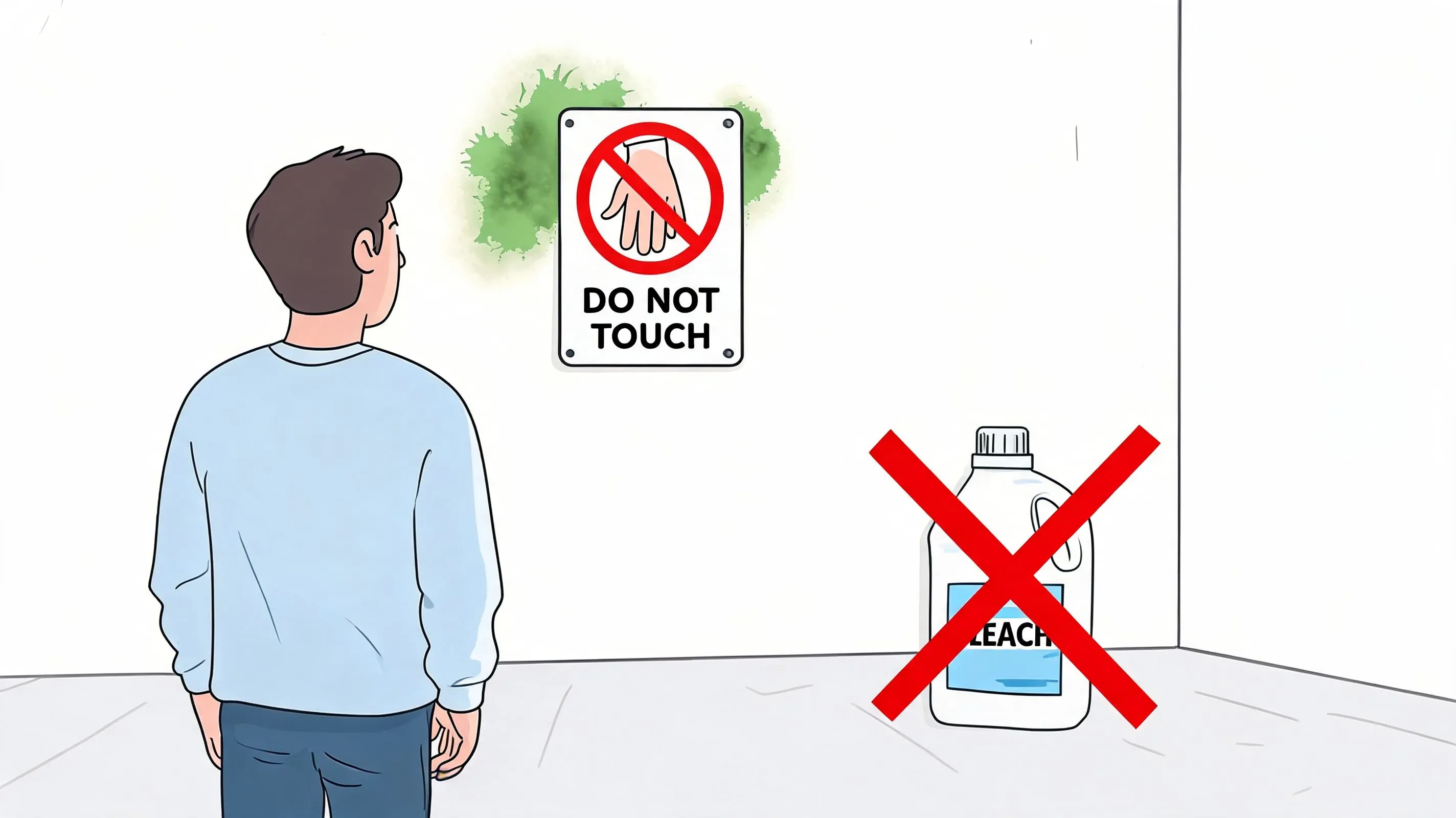
If you know where the moisture is coming from, stop it. Shut off the supply line. Tarp the leak. Turn off the HVAC if you suspect mold is tied to the system. Close doors to the area so you’re not moving air through the house.
Then leave it alone.
Improperly handled mold can lead to spore dispersal, causing recontamination in 25% of incomplete or DIY remediation jobs, according to Health Canada guidance on addressing moisture and mould. That’s why scrubbing at it, dry brushing it, or tearing into drywall before containment is a bad idea.
What not to do
Don’t spray bleach on it.
Don’t run a fan directly across a moldy wall.
Don’t rip out baseboards because you’re curious.
Don’t let a family member with asthma start “cleaning it up.”
If you need a practical local response plan for urgent home service issues, this geo strategy guide for local demand is useful for thinking through how location-based service searches work. From the homeowner side, the point is simple. Act fast, but don’t make the mess bigger while you wait.
How to Find Reputable Local Mold Experts
Typing mold remediation companies near me into Google is fine. Treat it like a starting point, not a decision tool.
The best shortlist usually doesn’t come from ads. It comes from people who deal with damaged houses all week long. If I were helping a neighbor, I’d tell them to call three people first. Their insurance agent, a local plumber they trust, and a real estate agent who works older homes. Those people see which contractors show up, communicate well, and finish jobs without drama.
Build a smart shortlist
A good local company usually leaves clues.
Look for these signs:
- A real local address: Not just a service area page and a tracking number.
- Detailed service pages: Good companies explain containment, material removal, drying, and clearance.
- Recent reviews with specifics: You want comments about cleanup, communication, punctuality, and follow-through.
- Project photos that look real: Not stock images, not vague close-ups, not the same attic used ten times.
Then call them. A five-minute phone call tells you a lot. Ask what their process is for containment. Ask whether they remove wet porous material when needed. Ask whether they recommend post-remediation verification. If the person answering can’t explain the basics without sounding confused or slippery, move on.
Don’t confuse visibility with quality
A company can be easy to find online and still be a weak choice. A lot of homeowners assume top search placement means trust. It doesn’t. It means they’re visible.
For a look at how local businesses show up in AI and search discovery, this piece on local SEO for AI discovery explains the visibility side well. That matters for contractors. For you as a homeowner, it means you should separate marketing from competence.
Use search to gather names. Use phone calls and paperwork to make the decision.
Good contractors answer direct questions with direct answers. Hacks dodge, distract, and hurry you.
Your Vetting Checklist Before You Hire
This is the part most homeowners skip. It’s also the part that saves them from paying twice.
A 2025 Restoration Industry Association survey found 62% of homeowners hire uncertified firms, often because the verification steps aren’t clear, and that leads to re-infestation rates up to 30%, according to BBB material citing the survey. That should bother you.
Don’t assume. Verify.
Check the company before you check the price
The cheapest quote from the wrong company is the most expensive option in the stack.
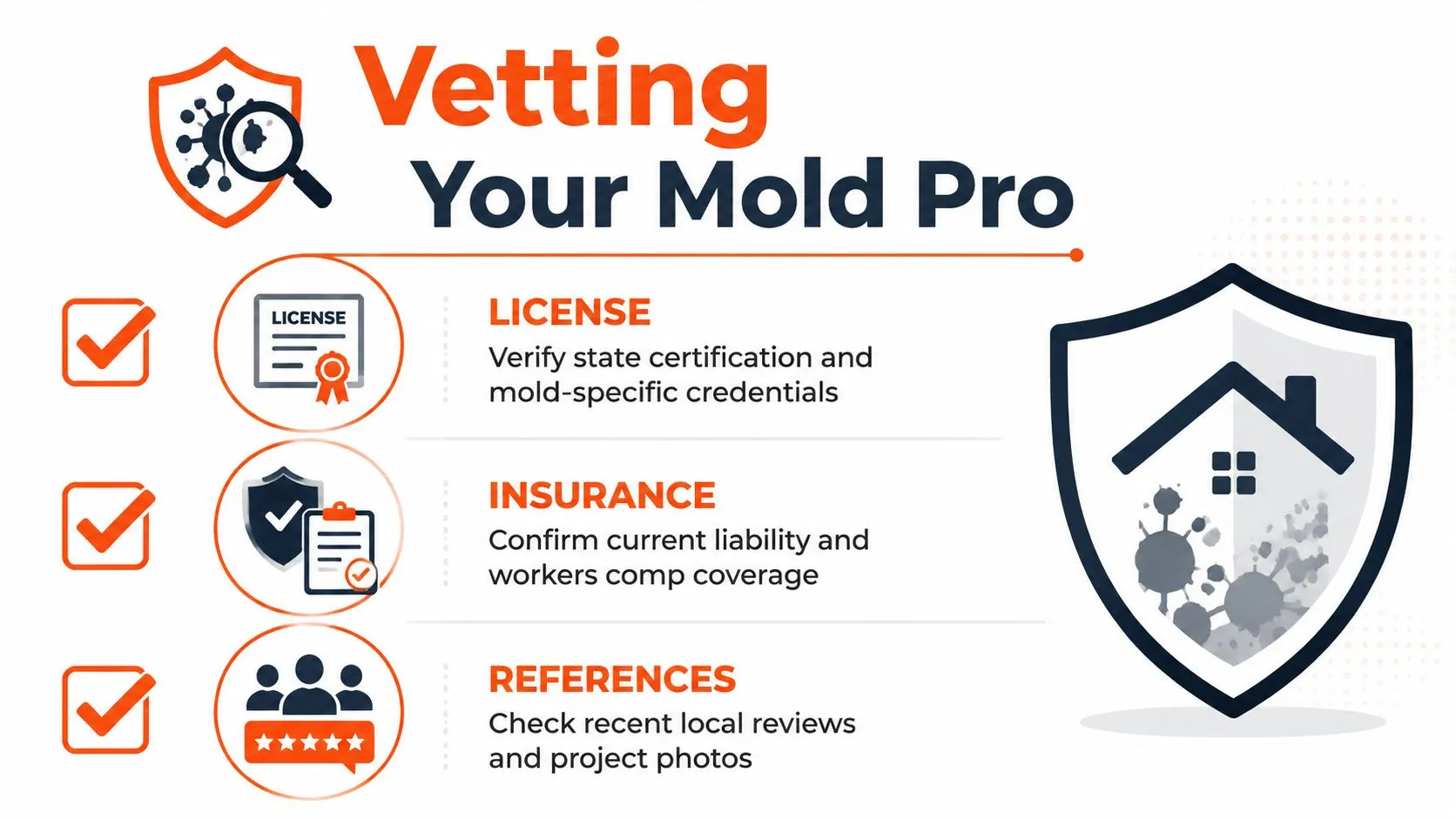
Start with credentials. Ask, “What mold-specific certifications do your technicians hold?” Then ask for the exact name on the credential and the certificate number if they have one. Don’t accept “we’re certified” as an answer.
Here’s the practical way to verify an IICRC certification:
- Ask for the company name exactly as it appears on the certificate.
- Ask whether the certification is held by the business, the estimator, or the technician who will be on site.
- Go to the IICRC website and use its public search tool.
- Match the company or technician name.
- Check that the status is current, not expired.
If they get cagey about any of that, that’s enough information. Keep shopping.
Also ask whether they carry a state contractor license where required. Mold rules vary by state. A decent company will know what applies in your area without fumbling around.
Ask for a real scope of work
A proper estimate should read like a plan, not a promise.
You want to see whether they’ll use containment, whether negative air is part of the setup, what materials they expect to remove, how they’ll clean, how they’ll dry the area, and what happens if they uncover hidden damage. If the quote just says “treat mold” or “clean affected area,” that’s weak.
A solid written scope usually answers these questions:
| What to ask | Good answer |
|---|---|
| How will you isolate the area | Plastic containment, controlled entry, air management |
| What gets removed | Specific materials listed, such as drywall, insulation, carpet pad |
| How do you clean | HEPA vacuuming, surface cleaning, antimicrobial or biocide use where appropriate |
| What about moisture | Drying plan and source correction |
| How do you close out the job | Clearance or verification steps in writing |
If they can’t explain the difference between removal, cleaning, and moisture correction, they’re not ready for your house.
The mold is only half the job. The moisture source is the other half. If they don’t solve both, you don’t have a completed project.
Verify insurance the right way
A real certificate of insurance matters. Ask for one before the job starts.
What should be on it?
- The business name must match the contract: Not a sister company, not a franchise name with a different legal entity unless they explain it clearly.
- Current effective dates: Old paperwork is useless.
- General liability listed: That protects against property damage claims tied to their work.
- Workers’ comp listed: If a crew member gets hurt and they don’t carry it, that can become your headache.
- The insurance agent’s contact information: A real certificate gives you a path to verify it.
Call the agency on the certificate. Use the phone number from the agency’s own website, not just the number typed on the form. Ask whether the policy is active. It takes a few minutes. Do it anyway.
A contractor who says “nobody ever asks for that” is telling on himself.
References still matter
Ask for two recent local jobs. Not from five years ago. Recent.
You’re not looking for a polished testimonial. You’re looking for normal answers from a homeowner who says the crew showed up when promised, kept the mess contained, communicated clearly, and finished clean. Ask whether the final invoice matched the scope, or whether the price changed every time they opened a wall.
For restoration companies trying to build real trust signals online, AI visibility and citation optimization for agencies is worth understanding. For a homeowner, though, trust starts offline. Phone calls. Documents. Names. Dates. Proof.
Red Flags That Scream Run Away
Some mold companies count on you being stressed. They know you want the smell gone, the stain gone, and the worry gone. That’s exactly when bad operators push the hardest.
If the whole interaction feels rushed, dramatic, or weirdly vague, listen to that instinct.

Bad advice shows up fast
A major pitfall is bleach. It’s largely ineffective on the organic materials where mold grows, leading to a 60% regrowth rate, according to this write-up on the mold remediation process. So if a contractor says bleach is the answer, that’s not old-school wisdom. That’s bad practice.
Same goes for painting over it.
If somebody says, “We’ll just seal it,” before they talk about removal, containment, or moisture correction, they’re hiding the problem, not solving it.
Watch for lines like these:
- “It’s all toxic black mold.” Fear-first language is often a sales move.
- “You need to sign now.” Real pros let you review a scope.
- “Testing says it’s bad, so we can start today.” A company selling the panic and the cure in one breath deserves extra scrutiny.
- “We don’t need containment for something this small.” Maybe, maybe not. But they should explain why, not brush it off.
Pressure is a business model
A contractor asking for a big cash deposit up front is a problem.
So is a one-page estimate with no details. So is refusing to send paperwork before the appointment. So is a company that can’t tell you who exactly is doing the work. If they subcontract everything and can’t name the crew lead, you don’t really know who’s coming into your home.
Good mold contractors aren’t casual about documentation. They know they’re working inside a house that may have health concerns, insurance involvement, and hidden moisture. Sloppy communication usually means sloppy field work.
What to Expect During and After the Job
Once you hire the right crew, the job should feel controlled. Not quiet, not pretty, but controlled.
What the crew should do first
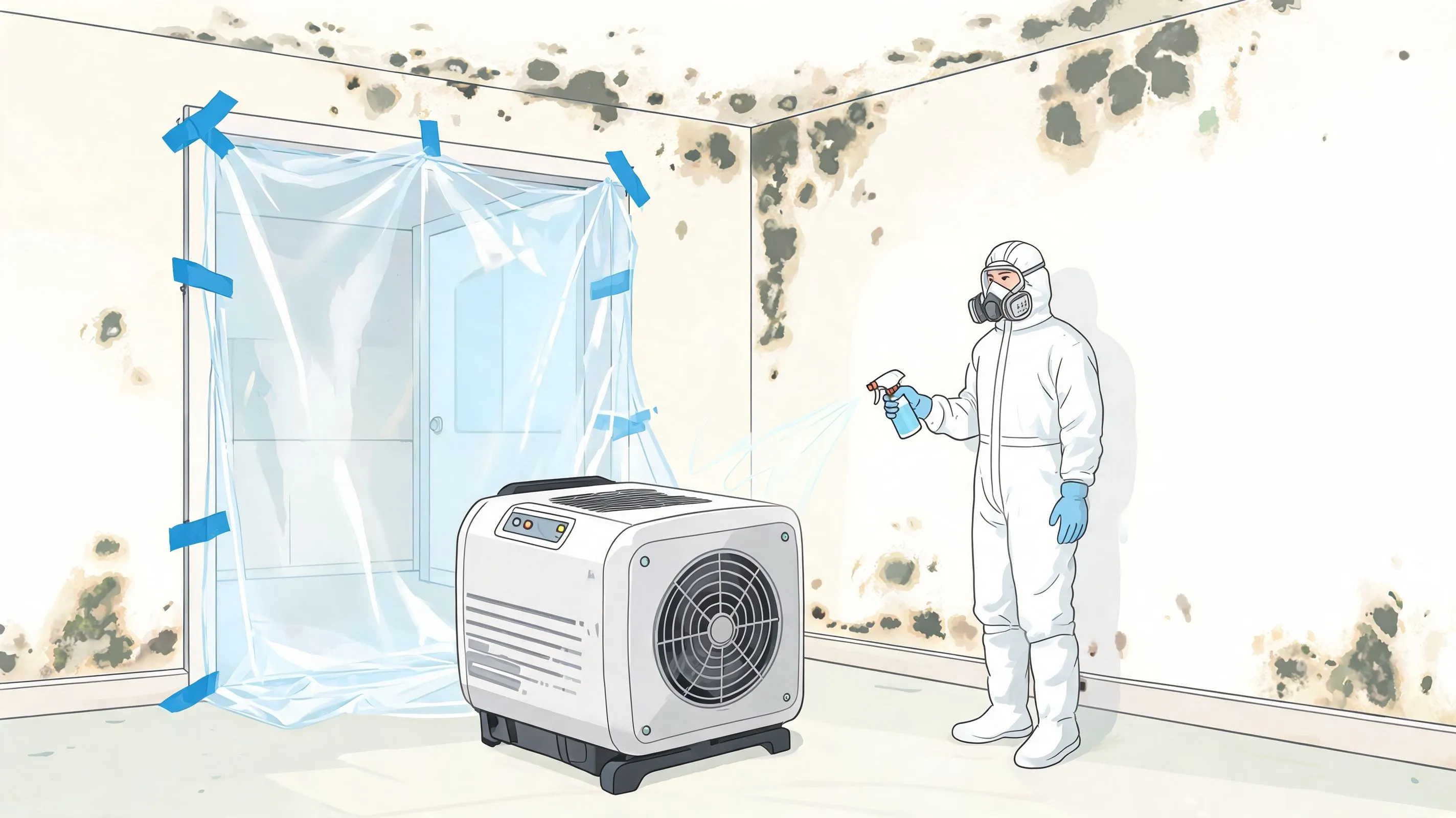
They’ll inspect the area again, because field conditions often look different than the first visit. Then they should set up containment. Expect plastic sheeting, controlled access, and air machines if the job calls for them. It may be noisy. That’s normal.
For smaller contained areas, projects often run 1 to 5 days based on the remediation process benchmark noted in the earlier guidance. The exact timeline depends on how much material has to come out, how wet the area is, and whether they find hidden damage once they open things up.
A normal job also involves disruption. Furniture may get moved. Sections of drywall or insulation may be removed. You might lose use of a bathroom, closet, laundry area, or part of a basement for a few days.
Here’s a useful walkthrough of the process in video form:
What done actually looks like
Done does not mean “the stain is gone.”
Done means the moisture issue was addressed, damaged material was handled properly, the area was cleaned, and the final condition was verified. A key indicator of completion is post-remediation verification showing mold spore counts are below 500 spores per cubic meter, in line with IICRC S520 standards, as noted in the earlier cited Health Canada guidance.
Ask for final paperwork. Keep the estimate, change orders, photos, and any clearance report in one folder.
Don’t release final payment just because things look cleaner. Mold jobs should close out on evidence, not vibes.
Frequently Asked Questions About Mold Remediation
Can I just paint over mold
No. That’s covering evidence, not fixing the problem. If a contractor suggests it as the solution, move on.
Should I get testing first
Sometimes yes, sometimes no. If the mold is visible and the moisture issue is obvious, the priority is often fixing the source and remediating correctly. In more complicated situations, independent testing can help define the extent or support documentation.
How much will it cost
It depends on size, materials, access, and how deep the moisture problem goes. A tiny cleanup and a multi-room tear-out are not the same job. What matters most is getting a written scope so you know what you’re paying for.
How long will it take
Small, contained jobs can move quickly. Bigger jobs take longer, especially when drying and reconstruction are part of the work. A trustworthy contractor will give you a realistic timeline in writing.
What’s the one thing I shouldn’t skip
Verification. Certifications matter. Insurance matters. Scope matters. But if you don’t verify the company and verify the finished job, you’re trusting too much.
If you run a restoration company and want to show up when homeowners ask AI who they should trust in an emergency, FirstMention is built for that. They help US restoration companies get in front of high-intent local searches inside ChatGPT, with a focus on booked jobs instead of shared leads.