Integrated SEO PPC Services: Drive More Restoration Jobs
Integrated SEO PPC services drive more booked jobs for restoration companies. Stop wasting money on separate campaigns. Get practical insights.

You’re probably in this spot right now. You’re paying for SEO. You’re paying for Google Ads. The phone rings some weeks, goes quiet other weeks, and nobody gives you a straight answer on which part is driving booked jobs.
That setup is common in restoration. It’s also wasteful.
Most restoration companies don’t have an SEO problem or a PPC problem. They have a coordination problem. One team chases rankings. Another team chases clicks. Meanwhile, the owner just wants more emergency calls, better jobs, and less wasted spend.
If your SEO and PPC are being run like two separate businesses, your budget is leaking.
Table of Contents
- Are Your SEO and PPC Budgets Fighting Each Other
- SEO vs PPC Is the Wrong Question
- The Flywheel Effect Data from Both Channels
- What Real SEO PPC Services Include
- Applying This to Emergency Restoration Marketing
- Questions to Ask Your Next Marketing Partner
- Your SEO and PPC Questions Answered
Are Your SEO and PPC Budgets Fighting Each Other
A lot of owners assume that if they’re buying both services, they already have a smart search strategy. That’s wrong.
Having SEO and PPC at the same time doesn’t mean they’re helping each other. In many restoration companies, they’re doing the opposite. The SEO vendor is publishing pages with one message. The PPC vendor is bidding on different terms, sending traffic to different pages, and reporting on different goals. You end up paying twice to learn nothing.
That’s a real problem in a market where search drives most customer discovery. About 93% of online experiences begin with a search engine, and organic search drives about 53% of web traffic while paid search adds about 27%, which means roughly 80% of trackable visits come through search according to HubSpot’s PPC and search traffic summary.
For a restoration company, that changes the math.
When a pipe bursts at 1 a.m., a homeowner isn’t browsing for fun. They’re searching with intent. Same for a property manager dealing with smoke damage or a mold issue that just failed an inspection. If you’re weak in search, you’re invisible at the exact moment money is on the table.
What siloed spending looks like
Here’s what I usually see:
- SEO chases broad traffic: Blog content gets written around general topics that don’t connect to job value.
- PPC chases short-term leads: Ads run on urgent terms, but the landing pages don’t match the search.
- Reporting hides the truth: One report says rankings improved. Another says clicks improved. Neither report says whether booked jobs improved.
That’s not a strategy. That’s two invoices.
Practical rule: If your SEO team and PPC team can’t show how one channel improves the other, you’re not buying integrated search. You’re buying separate work streams.
A lot of contractors have seen the same issue in other trades too. If you’ve looked at how paid search works in service businesses like ads for electricians, the pattern is familiar. Search wins when intent, message, and landing page all line up. Restoration is no different. The stakes are just higher.
What to do instead
Treat search like one demand capture system.
Your paid ads should tell you which searches bring calls now. Your SEO should turn that paid intelligence into long-term local visibility. If those two motions aren’t connected, your budget isn’t compounding. It’s colliding.
SEO vs PPC Is the Wrong Question
At 2 a.m., a pipe bursts in a commercial building and the property manager searches for help. If your restoration company is not visible right then, the job goes to someone else.
That is why “SEO or PPC?” is the wrong framing.
You are not picking one winner. You are building a search system that captures demand in two different ways. For a restoration company, SEO builds durable local visibility. PPC puts you in front of urgent searches right away. Both matter if your goal is more emergency calls, more inspections, and more booked jobs.
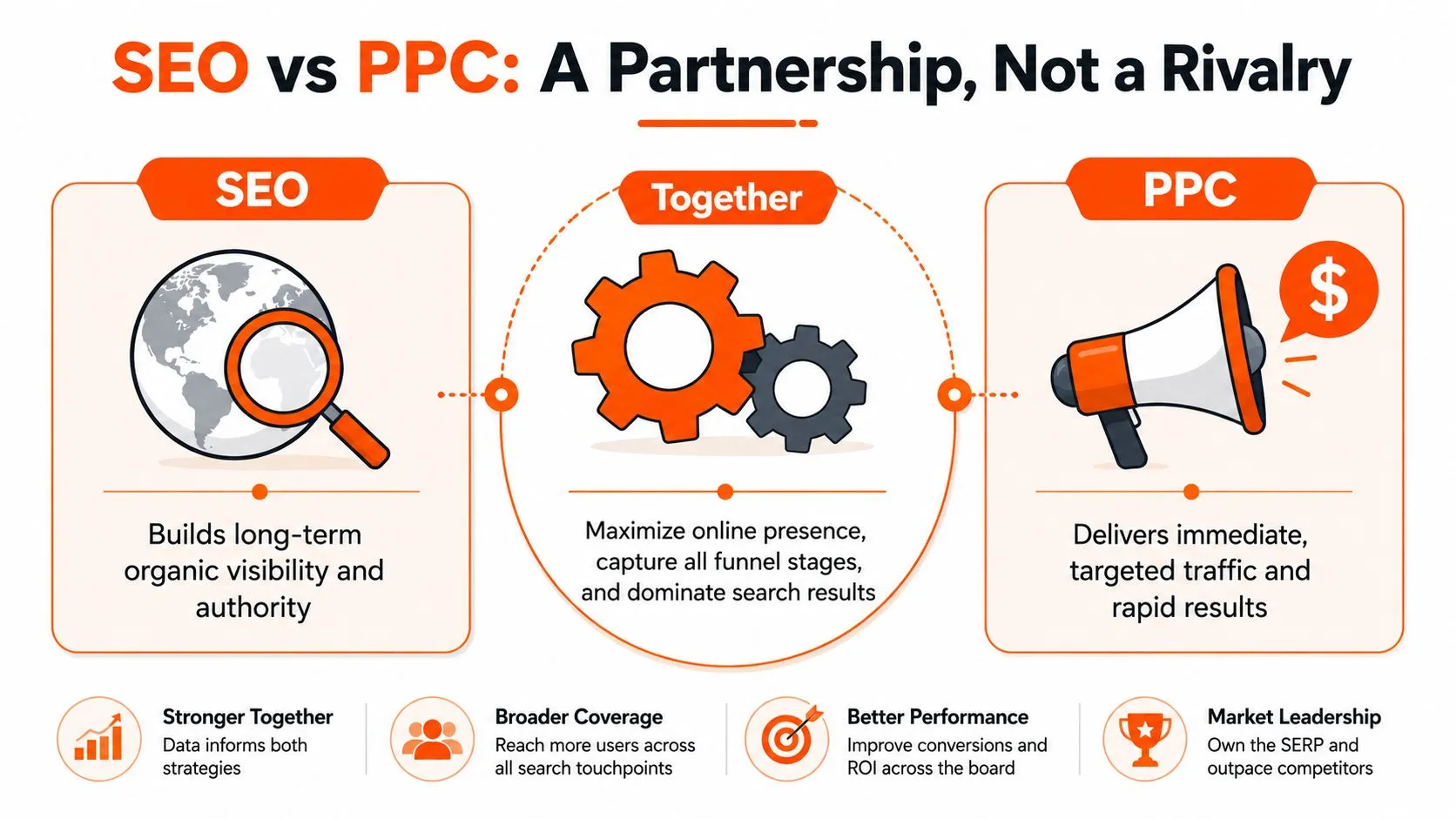
SEO builds an asset your company keeps
SEO is the part you own.
Your water damage pages, fire cleanup pages, mold pages, city pages, review signals, internal links, and Google Business Profile support all add up over time. Done well, that work keeps producing visibility without charging you for every visit.
That matters in restoration because trust and local relevance decide who gets the call. A homeowner dealing with a flooded basement does not want a generic article. They want a company that shows clear service coverage, fast response, and proof you handle this problem every day.
SEO also helps you show up in newer search paths, including AI-driven discovery and tools such as ChatGPT Ads, where strong service pages, location coverage, and brand authority influence whether your company gets surfaced at all.
PPC buys speed and gives you fast feedback
PPC gives you immediate visibility for high-intent searches like “emergency water extraction,” “fire damage restoration,” and “mold removal near me.”
That speed is valuable. You can launch today, see search terms quickly, and learn which services, cities, and messages produce real calls instead of junk leads.
But PPC should do more than fill the schedule this week. It should also show you where your market is strongest, which searches waste budget, and which landing pages help people call. If your agency keeps buying clicks without using that information to improve your organic presence, you are renting attention without building anything.
PPC should buy speed first. Then it should buy clarity.
The smart move is to make each channel improve the other
Use PPC to pressure-test demand. Use SEO to turn the winners into lasting visibility.
If ads for “burst pipe cleanup” in one city bring strong calls, build that into your SEO strategy. If a headline about 60-minute response drives better conversion, bring that message onto service pages. If a landing page pulls in bad leads, fix the offer, the copy, or the targeting before you scale it anywhere else.
That is how real SEO PPC services work for restoration companies. You are not chasing traffic for its own sake. You are using search to get more of the jobs you want.
Any agency still presenting SEO and PPC as a budget fight is behind.
The Flywheel Effect Data from Both Channels
When SEO and PPC share data, the whole system gets sharper.
That’s the true value. Not more dashboards. Not nicer reports. Better decisions.
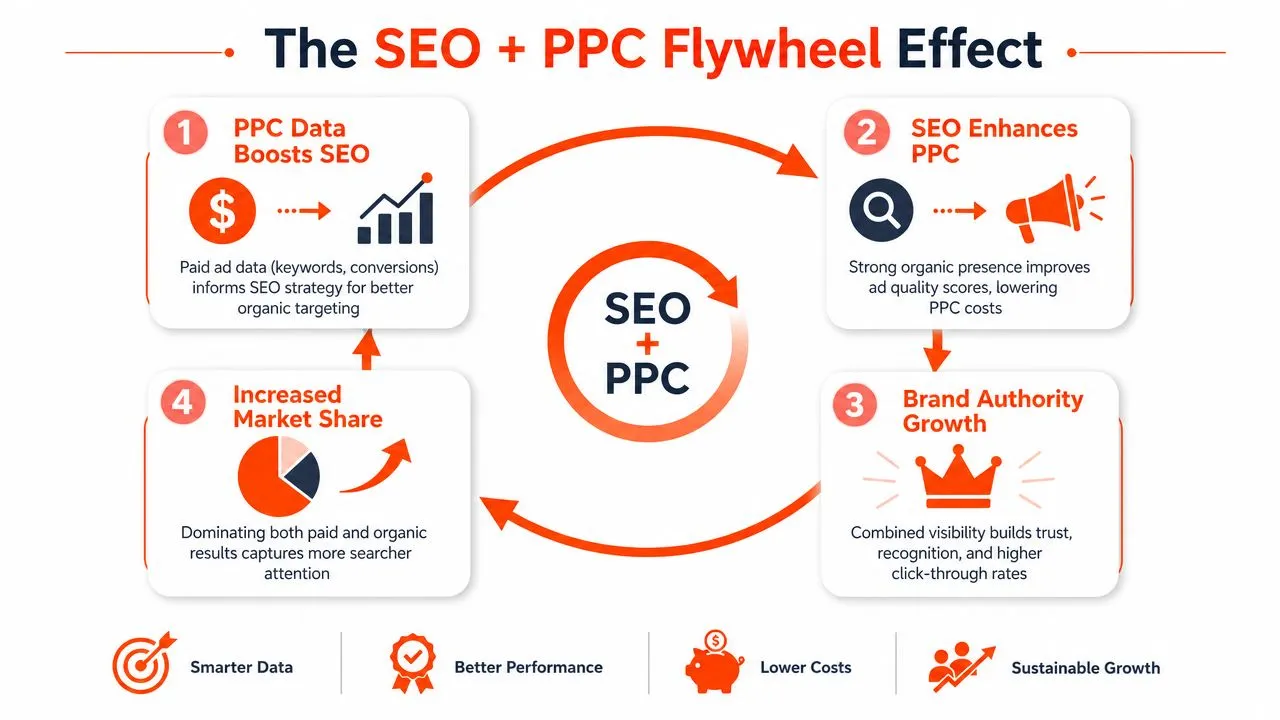
A solid operating model joins keyword, query, landing-page, and conversion data across Google Ads, Google Search Console, and analytics. When teams do that, paid search shows what converts quickly, and SEO shows broader demand patterns. Then you can prioritize high-value terms in both channels based on what real customers do, as described in OrangeMonke’s guide to integrating SEO and PPC services.
How the flywheel works in practice
Let’s keep this simple.
You run ads for several restoration services across a few cities. Some searches bring solid calls. Others bring bad leads, DIY traffic, job seekers, or people outside your service area. PPC exposes that fast.
SEO usually moves slower, but it gives you room to build durable coverage around the terms that matter. Once paid data tells you what converts, you stop guessing what to optimize organically.
That creates a flywheel:
-
PPC finds winners fast
Search terms, headlines, and landing pages either produce qualified calls or they don’t. -
SEO builds around those winners
You create or improve service pages, local pages, title tags, and supporting content around proven demand. -
Organic presence reinforces paid performance
Searchers see your name more often, which strengthens recognition and trust. -
Better visibility brings cleaner data
More qualified traffic across both channels gives you more signal for the next round of decisions.
What that means for restoration owners
This matters more in restoration than in lower-urgency industries.
A homeowner with standing water isn’t doing a month of comparison shopping. They’re looking for someone credible, local, and available. If they see your ad and your organic listing in the same search results, that can make your company feel established instead of random.
Here’s a useful breakdown:
| Search activity | What PPC tells you | What SEO does with it |
|---|---|---|
| Urgent service keyword | Whether the term drives calls now | Build a dedicated service page and local relevance around it |
| Ad headline test | Which wording gets action | Use that message in title tags and on-page copy |
| Landing page result | Which page type converts | Expand that structure across similar services and cities |
| Search term report | Which queries are junk | Filter them out of paid and avoid building SEO around them |
Before you keep reading, this short video gives a good visual explanation of the relationship between both channels.
What most agencies miss
They stop at channel metrics.
They’ll tell you cost per click, impression share, rankings, or traffic trends. Useful, but incomplete. The critical question is whether paid data is actively shaping your SEO priorities, and whether SEO insights are helping your paid campaigns avoid waste.
If that loop isn’t happening, there is no flywheel. There’s just activity.
What Real SEO PPC Services Include
A restoration owner does not need two disconnected marketing programs. You need one system that turns searches into calls, inspections, and booked jobs.
That is the standard.
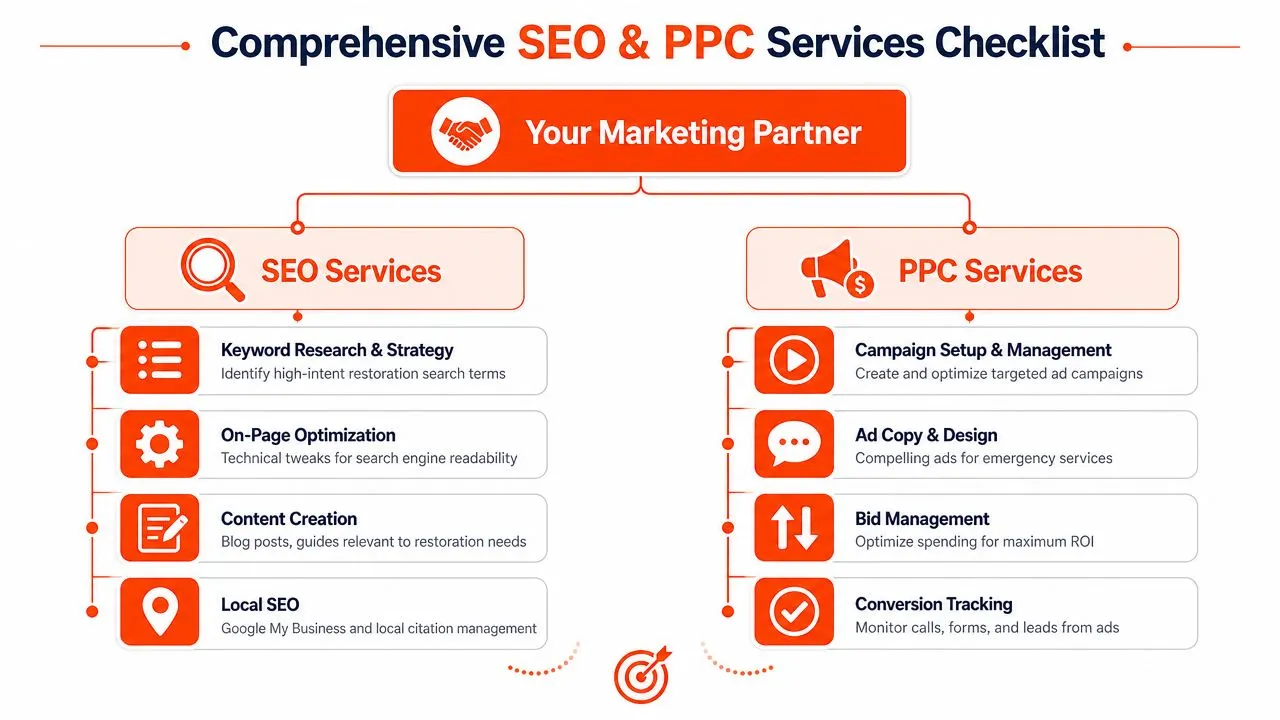
Core components of an integrated strategy
-
Shared keyword planning
SEO and PPC should be built from the same service map. Water damage in one city is different from mold testing in another. Emergency intent, insurance-related intent, and research intent each need their own plan. -
One conversion view
Calls, forms, chat leads, and booked jobs should roll into the same reporting view. If one report shows rankings and another shows lead volume, but nobody ties either one to real jobs, your agency is hiding the ball. -
Landing pages built for intent
A flood cleanup search should land on a flood cleanup page. A fire damage search should not hit a generic services page. A good agency tests page layout, copy, headlines, and call routing by service type and city. -
Search term feedback between channels
PPC search terms should shape the SEO content calendar. SEO query data should shape ad groups, negatives, and landing page targets. If that loop is missing, you are paying twice to learn the same lesson. -
Local page strategy
Restoration is local and urgent. Your provider should build and test city pages, service pages, and location signals based on where calls turn into jobs. If you want a benchmark for how agencies should tie marketing work back to lead quality, review this marketing agency lead generation framework.
Landing page match is where waste shows up first
I would check this before anything else.
A lot of restoration campaigns fail because the click goes to the wrong page. Someone searches for “emergency water extraction” and lands on a broad homepage. Someone searches for “mold inspection” and lands on a water damage page. That mismatch burns budget fast and cuts call rates.
Seer Interactive explains the practical fix in its SEO and PPC data integration article. Compare paid search terms, final URLs, and the pages already ranking organically. That gives you a clearer view of what searchers expect and what Google already treats as relevant.
A bad final URL can waste a good keyword.
Quick audit table
Use this with any agency or in-house team.
| If they do this | It usually means |
|---|---|
| SEO and PPC teams work from separate plans | Strategy is split and slower to improve |
| Paid traffic goes to the homepage | Intent matching is weak |
| Reports stop at clicks, traffic, and rankings | They are avoiding job-level accountability |
| Search term reports never shape content plans | Your paid budget is not improving SEO |
| Every city uses the same page template and copy | Local relevance is thin |
| No one tests newer search placements like AI-assisted results | You are missing early visibility in channels that will matter next |
Real SEO PPC services should cover Google search today and prepare you for where search is going next, including AI-driven discovery and placements such as ChatGPT Ads. For a restoration company, the goal stays the same. More qualified emergency calls. More booked jobs. More local market share.
Applying This to Emergency Restoration Marketing
Restoration isn’t like roofing, legal, or med spa marketing. The buying window is shorter. The stress is higher. The caller often wants help right now.
That’s why your search strategy has to split intent correctly.
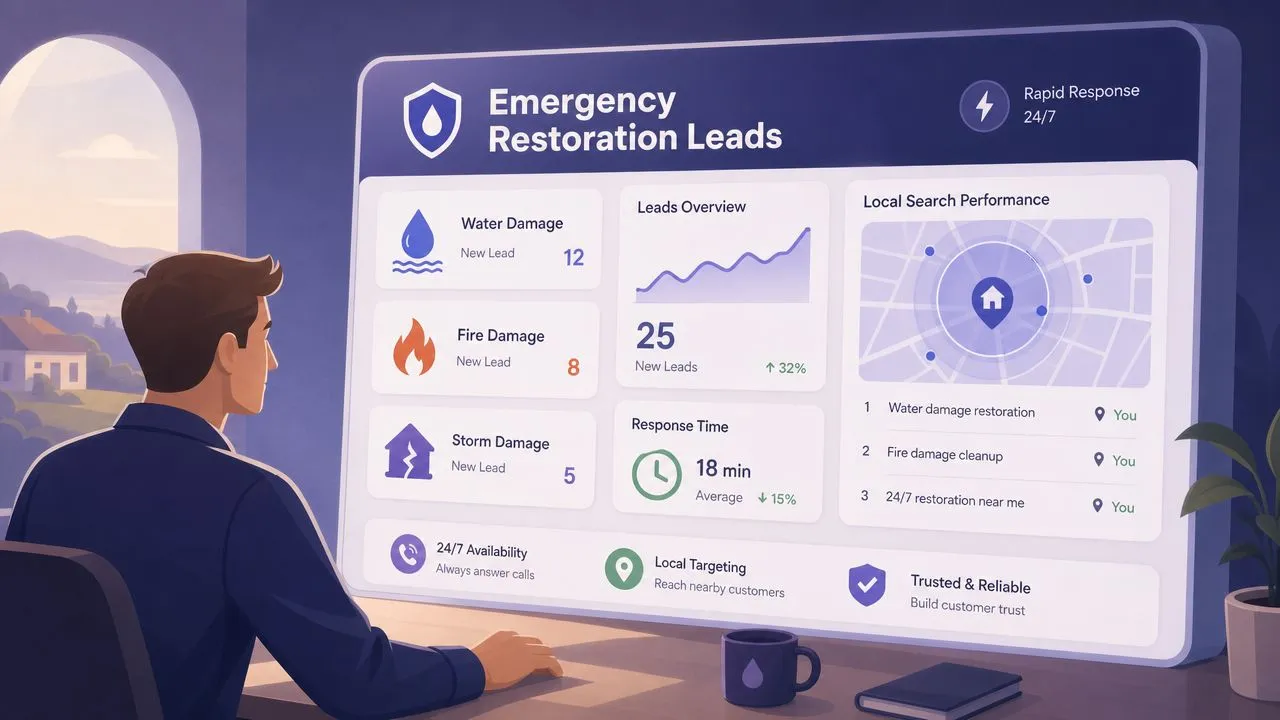
Google’s own business guidance draws the line clearly. PPC buys immediate visibility for urgent-intent searches, while SEO builds long-term organic visibility and trust. For restoration companies, the more useful model is to treat PPC as the short-cycle demand capture layer and SEO as the long-term asset layer tied to booked jobs and revenue, as noted in Google’s SEO vs. PPC business guide.
Separate emergency intent from research intent
Not every restoration search should be handled the same way.
If someone searches for emergency help, paid search should be aggressive. You want strong geo-targeting, direct response copy, call-focused landing pages, and clean routing. Speed matters.
If someone searches a problem earlier in the cycle, SEO should do more of the work. Those people may be trying to understand mold symptoms, whether water damage is covered, or what smoke odor means after a small fire. That’s where educational content, service explainers, and local authority pages matter.
Here’s a simple way to understand:
-
Emergency searches
Best handled with PPC first. Fast visibility. Strong calls to action. Tight service-area control. -
Evaluation searches
Often handled by both. Paid can test demand while SEO builds permanent visibility. -
Research searches
Usually better for SEO-led coverage, with retargeting or selective paid support if needed.
Local consistency matters more than cleverness
In restoration, trust is local.
Your service areas, landing pages, ad copy, Google Business Profile signals, and reviews all need to tell the same story. If your ads say “24/7 water damage cleanup in Dallas” but the landing page is broad, thin, or clearly built for ten other cities, people notice. Google notices too.
The homeowner doesn’t care about your channel structure. They care whether you look credible enough to call.
That’s one reason generic lead-gen campaigns underperform. They often chase volume instead of local fit. A better model connects every search touchpoint to real service availability and real routing.
You can see a similar thinking pattern in broader marketing agency lead generation work. The channel matters less than the match between intent, message, and conversion path. In restoration, that match has to be tighter because the searcher is under pressure.
Where ChatGPT Ads fit
AI search is changing how some customers start the buying process.
More homeowners and property managers now ask AI tools what to do, who to call, and which provider seems trustworthy. That doesn’t replace Google. It adds another front door.
The same integrated logic still applies. Your organic presence helps establish trust and relevance. Your paid placement in AI environments can help you show up earlier in the decision. If you treat AI search as a separate toy, you’ll repeat the same silo problem many companies already have with SEO and PPC.
Use one demand model across all three. Search query. Landing page. Conversion. Booked job.
Questions to Ask Your Next Marketing Partner
If you’re hiring an agency, don’t ask if they “do SEO and PPC.” Every agency says yes.
Ask questions that expose whether they run one search system or two disconnected services.
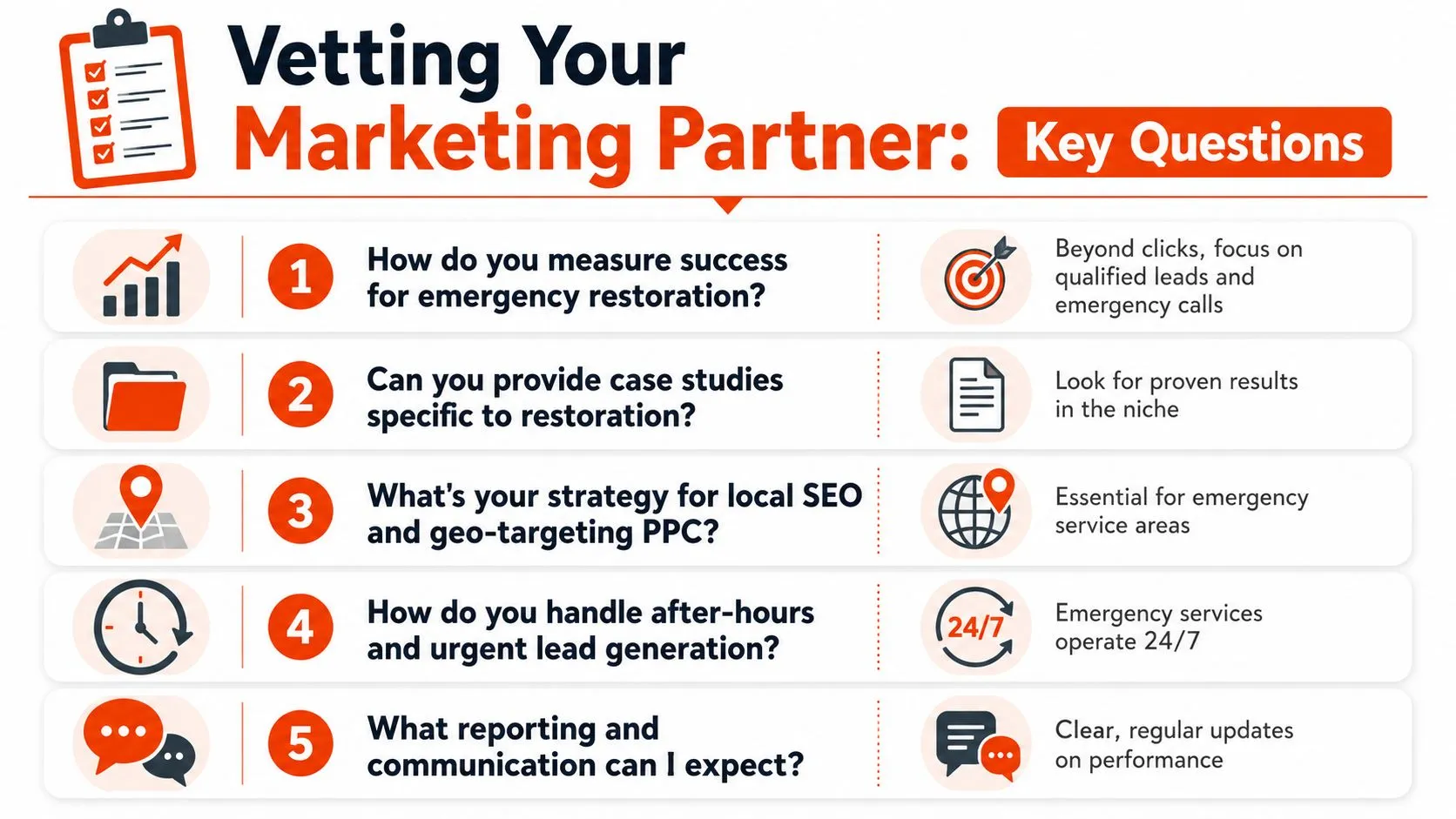
Ask them these directly
-
How do you tie both channels to booked jobs, not just leads?
If they answer with clicks, form fills, impressions, or rankings, keep pushing. You need to know whether they can connect search activity to actual revenue outcomes. -
How does PPC data change the SEO roadmap?
They should have a clear answer. Search term reports, call outcomes, and winning ad messages should influence what pages get built or updated. -
How does SEO data improve paid performance?
Good partners use organic query themes, ranking URLs, and page relevance to tighten paid targeting and improve landing-page fit. -
Who owns the landing-page strategy?
If nobody does, that’s a problem. In restoration, page mismatch kills conversions fast. -
Can you show me how you handle local intent by city and service?
“Water damage” in one market isn’t the same as “mold remediation” in another. Local structure matters.
Watch for weak answers
Bad agencies hide behind activity.
They say things like “we optimize continuously” or “we take a full-funnel approach.” That sounds nice. It tells you nothing. You want specifics. Which terms convert. Which pages get traffic. Which calls turn into work. Which searches are being excluded because they waste budget.
A serious partner should also be able to explain communication and accountability in plain English. If the reporting process feels slippery before you sign, it’ll be worse after.
A useful benchmark is whether they can walk you through their process the way firms explain how they work with clients. Not polished language. Clear process. Clear ownership. Clear decisions.
If an agency can’t explain their operating model simply, they probably don’t have one.
Pricing matters, but alignment matters more
Retainers can work. Project fees can work. A percentage of ad spend can work. The structure matters less than the incentives.
If they make more money just by increasing your spend, ask what protects you from bloat. If they charge separately for SEO and PPC but never show combined outcomes, ask why. The right setup rewards performance, discipline, and decision quality. Not channel sprawl.
Your SEO and PPC Questions Answered
Do I need a big budget for integrated SEO PPC services
No.
This isn’t about having a giant budget. It’s about making your current budget smarter. Even a modest campaign gets better when paid search tells you what converts and SEO builds around that evidence.
How can I tell if my current agency is already doing this
Ask for one thing. A report that shows how SEO insights affect PPC decisions and how PPC data affects SEO priorities.
If they can only show separate reports, they’re probably running separate programs.
Should a restoration company start with PPC or SEO
If calls are thin now, start with PPC for immediate demand capture and use the data to guide SEO. If you already have lead flow and want stronger long-term efficiency, keep PPC running where urgency matters and invest harder in local SEO assets.
The mistake is choosing one out of ideology.
How long until this starts working
PPC can start producing data and leads quickly if the account structure, landing pages, and tracking are solid. SEO takes longer because you’re building durable visibility, not renting it.
That’s why the combined model works. Paid search gives you immediate signal. SEO turns that signal into something you own.
What’s the biggest mistake restoration owners make
Letting agencies optimize for channel metrics instead of business outcomes.
You don’t need more “visibility” in the abstract. You need more qualified emergency calls, more inspections, better job mix, and clearer attribution.
Does this apply to AI search and ChatGPT Ads too
Yes.
The same rules carry over. Intent still matters. Local trust still matters. Landing pages still matter. Tracking still matters. AI doesn’t remove the need for strategy. It punishes lazy strategy faster.
If you want a search program built around booked restoration jobs instead of disconnected channel reports, FirstMention is one option to look at. The company focuses on US restoration businesses and helps connect urgent-intent discovery in ChatGPT Ads with the broader search work that supports real local demand capture.