7 Best Lead Companies for Restoration in 2026
Find the best lead companies for your restoration business. Our 2026 guide reviews top vendors on lead quality, exclusivity, cost, and contract terms.

Stop buying leads. Start buying jobs.
Most lead companies sell clicks, forms, or raw calls. That’s not what a restoration business needs. You need booked jobs, fast contact, and a real shot at emergency work before the homeowner calls the next company on the list.
That’s why generic “best lead companies” roundups usually miss the point. They rank big names by volume, broad reach, or brand recognition. Restoration contractors need something tighter. You need to know whether leads are exclusive, whether the source handles urgent water damage intent well, and whether the cost makes sense once you track it to actual jobs.
The other problem is category confusion. Some companies sell appointment-setting. Some sell contact data. Some sell shared homeowner inquiries. Some help you build your own inbound machine. Built In separates lead generation companies by model and outcome, which is the right way to think about this for local service buyers, not as one giant “best overall” bucket (Built In’s lead generation company breakdown).
This guide gets to the point. These are the best lead companies for restoration contractors who care about exclusivity, lead quality, and cost per job, not just cost per lead.
Table of Contents
- 1. FirstMention
- 2. Google Local Services Ads (LSA)
- 3. Angi Leads (formerly HomeAdvisor)
- 4. Thumbtack for Pros
- 5. Service Direct (Pay‑Per‑Call Marketplace)
- 6. Networx
- 7. Modernize Home Services (QuinStreet)
- Top 7 Lead Companies Comparison
- Own Your System, Don’t Just Rent Leads
1. FirstMention
If you judge lead companies by cost per lead alone, restoration usually loses. Emergency work is won on response speed, local visibility, and call handling. A cheap lead that gets shared three ways or hits your office after hours is often expensive by the time you measure booked jobs.
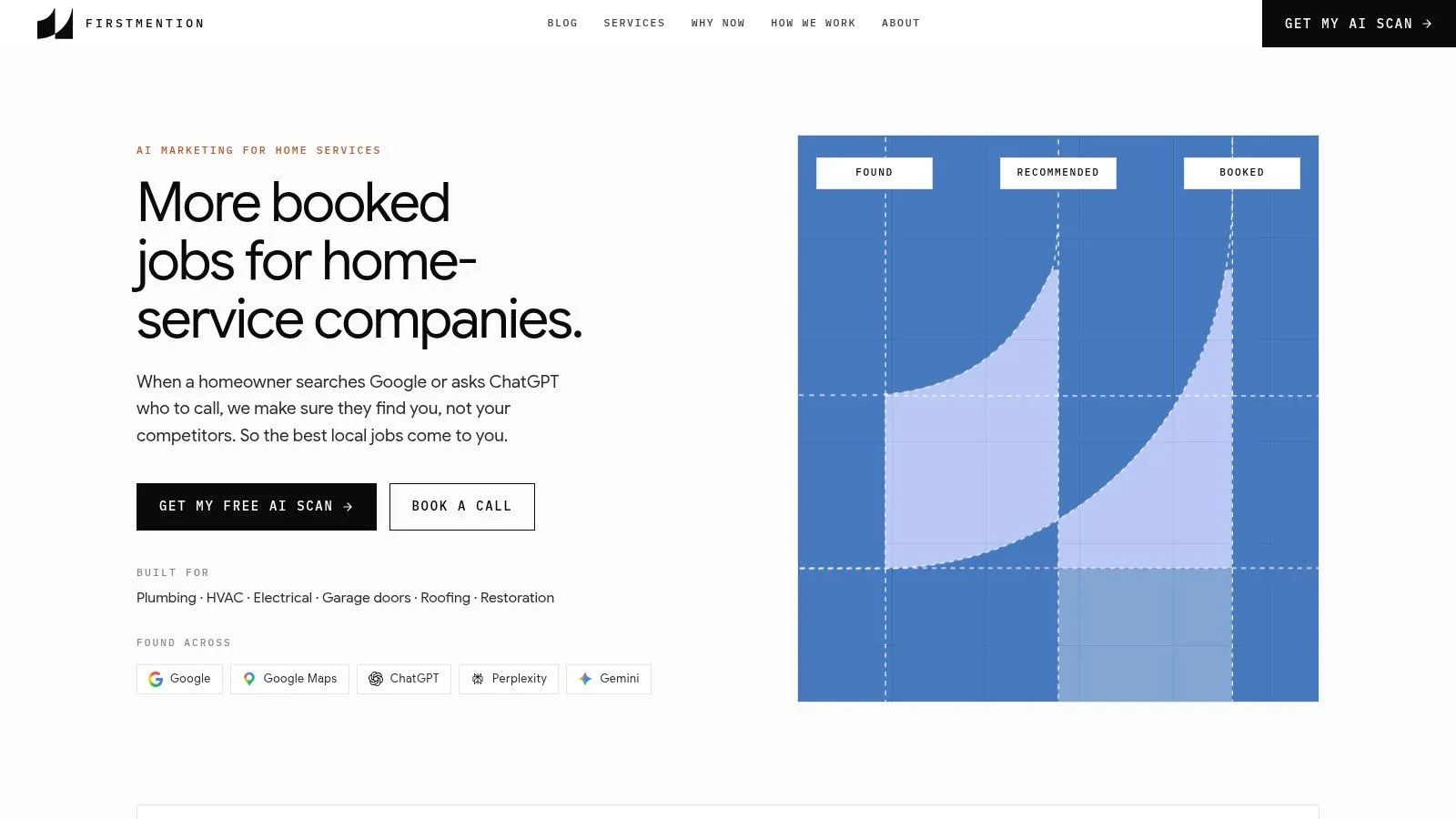
That is why FirstMention belongs in this list, even though it does not operate like a standard lead marketplace. It helps restoration contractors build an owned acquisition system across their website, Google Business Profile, Maps, paid search, and newer AI-driven search surfaces. For water, fire, and mold work, that matters more than stacking another vendor on top of a shaky intake process.
A broader lead gen lesson shows up here too. Analysts cited in Trustmary’s lead generation statistics roundup note that strong B2B lead teams put their effort into the channels where buyers already show intent. Restoration is no different. The point is not to chase every platform. The point is to show up where distressed homeowners are already looking and to convert that demand fast.
Why it stands out for restoration
FirstMention is built for owner-led service companies that want one operating system instead of five disconnected tools. It combines search visibility, service page strategy, call tracking, missed-call text-back, AI-assisted intake, follow-up, and reactivation. That setup is more useful in restoration than a spreadsheet full of names because the bottleneck is rarely lead count by itself. It is whether your company got found, answered first, and booked the loss before someone else did.
That distinction matters on emergency jobs. A homeowner with a burst pipe does not care whether your marketing report shows more impressions this month. They care whether your company appeared in the right places, answered immediately, and sounded credible enough to dispatch.
Practical rule: If a lead company cannot show how missed calls, slow follow-up, weak local pages, and poor map visibility affect booked jobs, it is not solving the core issue.
The operator background is a plus. The team previously built and sold AdjustLeads and has experience managing home-service ad spend. That usually leads to better conversations about call quality, routing, service-area coverage, and where jobs are leaking out of the funnel. If you want a useful comparison of intent-driven search ads versus generic traffic buying, this guide on how ads for electricians work in practice translates well to restoration.
Best fit
FirstMention fits restoration contractors who want control over lead flow and better economics at the job level. It is less attractive if your only goal is to buy a burst of outside leads next week and worry about your own marketing later.
The trade-offs are straightforward:
- Better alignment with emergency work: It ties visibility, conversion, and follow-up together, which matches how restoration jobs are won.
- Less dependence on shared leads: The goal is to generate and convert your own demand, not compete for the same inquiry other contractors are chasing.
- More setup than buying marketplace leads: This approach takes coordination and a real intake process. It is not instant.
- Custom pricing: You will need a conversation to see fit and cost. There is no public rate card.
- Best for local operators: It is built for owner-led home-service businesses, not national roll-ups looking for a simple media buy.
For restoration contractors comparing vendors on exclusivity, quality, and cost per booked job, that makes FirstMention a different category. It is less about renting leads and more about fixing the system that should be producing them in the first place.
2. Google Local Services Ads (LSA)
Google Local Services Ads is one of the few channels that often feels close to buying jobs instead of buying traffic. It sits at the top of the search results, catches people with immediate intent, and keeps the process simple. You pick service area, category, and budget. Google sends calls or messages.
For restoration, that matters because emergency demand is messy. A homeowner with water damage usually wants a real company now, not a long research process.
Where LSA wins
LSA works best when you already answer the phone, have tight coverage areas, and can respond like it’s an emergency business, because it is. The lead-credit system also matters. If a lead is clearly poor quality, there’s at least a mechanism to dispute it.
The practical upside is speed. People who hit LSA often aren’t comparing ten long-form websites. They want reassurance, location match, and someone to answer.
Fast response makes or breaks marketplace leads. LSA just happens to be one of the cleaner versions of that game.
There’s also a nice strategic angle here. If you’re already running paid search, it helps to understand how LSA differs from standard PPC. This breakdown of ads for electricians is written for another trade, but the core lesson carries over. Intent and lead handling matter more than just buying more clicks.
Where it breaks down
LSA is still rented demand. You don’t own the customer path. Google controls ranking, visibility, and lead flow. If your market gets crowded, your budget can disappear quickly and quality can swing with seasonality.
It also won’t fix weak operations. If your office misses calls, your lead source isn’t the problem.
Use LSA when you need high-intent volume and can handle it well. Don’t treat it as your whole growth plan. For restoration, it’s best as a strong channel inside a broader system.
Visit Google Local Services Ads.
3. Angi Leads (formerly HomeAdvisor)
Angi is still one of the most common names contractors test first. That usually happens for one reason. It can produce volume quickly in a lot of markets.
If your schedule has holes and you need activity, Angi can help. But restoration is one of the categories where speed, exclusivity, and lead context matter a lot more than raw volume.
What it does well
Angi has broad consumer reach and a familiar contractor app. You can control budget, review billing, and keep work flowing in suburban and urban markets where homeowners already use marketplace platforms.
That makes it useful when you need to fill capacity or test demand in a new service area. If your team is disciplined about response time and qualification, shared leads can still turn into revenue.
There’s also a bigger lead-gen lesson behind it. Recent guidance from MarketJoy says buyers should ask whether a vendor focuses on revenue or just leads, whether it supports AI and answer engine optimization, and whether it integrates with a CRM (MarketJoy’s 2026 lead generation company guidance). That’s the right frame for evaluating Angi. Don’t ask whether it sends leads. Ask whether those leads turn into jobs after routing, follow-up, and qualification.
Where contractors get burned
Shared leads are the core issue. In restoration, every extra minute hurts you. If the homeowner submitted one request and three or more contractors got it, the first competent company to connect usually wins.
- Speed matters most: If your coordinator doesn’t call immediately, don’t buy shared leads.
- Margin gets thinner: Even when volume looks decent, the race-to-contact can push close rates down.
- Refunds aren’t the same as cash back: Credit-based adjustments help, but they don’t remove the friction.
For a closer look at the broader pros and cons of marketplace vendors, this guide on contractor lead service options is worth reading.
You can review Angi’s contractor platform at Angi for Pros.
4. Thumbtack for Pros
Thumbtack sits in a different lane from Angi, even though contractors often lump them together. It’s more app-driven, more quote-oriented, and usually more dependent on profile strength and fast replies.
For restoration, that means it can work. But only in a narrow way.
Best use for a restoration company
Thumbtack is usually better for smaller jobs, lower-friction requests, and companies that can quote quickly through the app. If you already have strong reviews, quick office coverage, and clean service-area discipline, it can add work without locking you into a long contract.
The mechanics are straightforward. You pay for contact rather than old-school directory placement. That makes day-to-day management simpler for a lot of smaller operators.
Thumbtack rewards the contractor who replies fast, sounds trustworthy, and doesn’t overcomplicate the first contact.
It’s also flexible. If you need an extra stream of local demand while building stronger direct channels, Thumbtack can serve as a temporary support channel instead of a forever strategy.
What to watch
The downside is familiar. Shared attention. Homeowners compare multiple pros. Some disappear. Some ask for pricing with weak buying intent. Some need hand-holding that doesn’t fit emergency restoration workflows.
- Good for quick-response teams: If your office is sharp and your tech stack is simple, it’s easier to manage.
- Less ideal for complex loss work: Larger insurance-driven jobs often need better qualification than app-based quoting allows.
- Manual work adds up: You may spend real time quoting conversations that never turn into site visits.
Thumbtack can help fill gaps. It usually won’t become the backbone of a serious restoration company.
See Thumbtack for Pros.
5. Service Direct (Pay‑Per‑Call Marketplace)
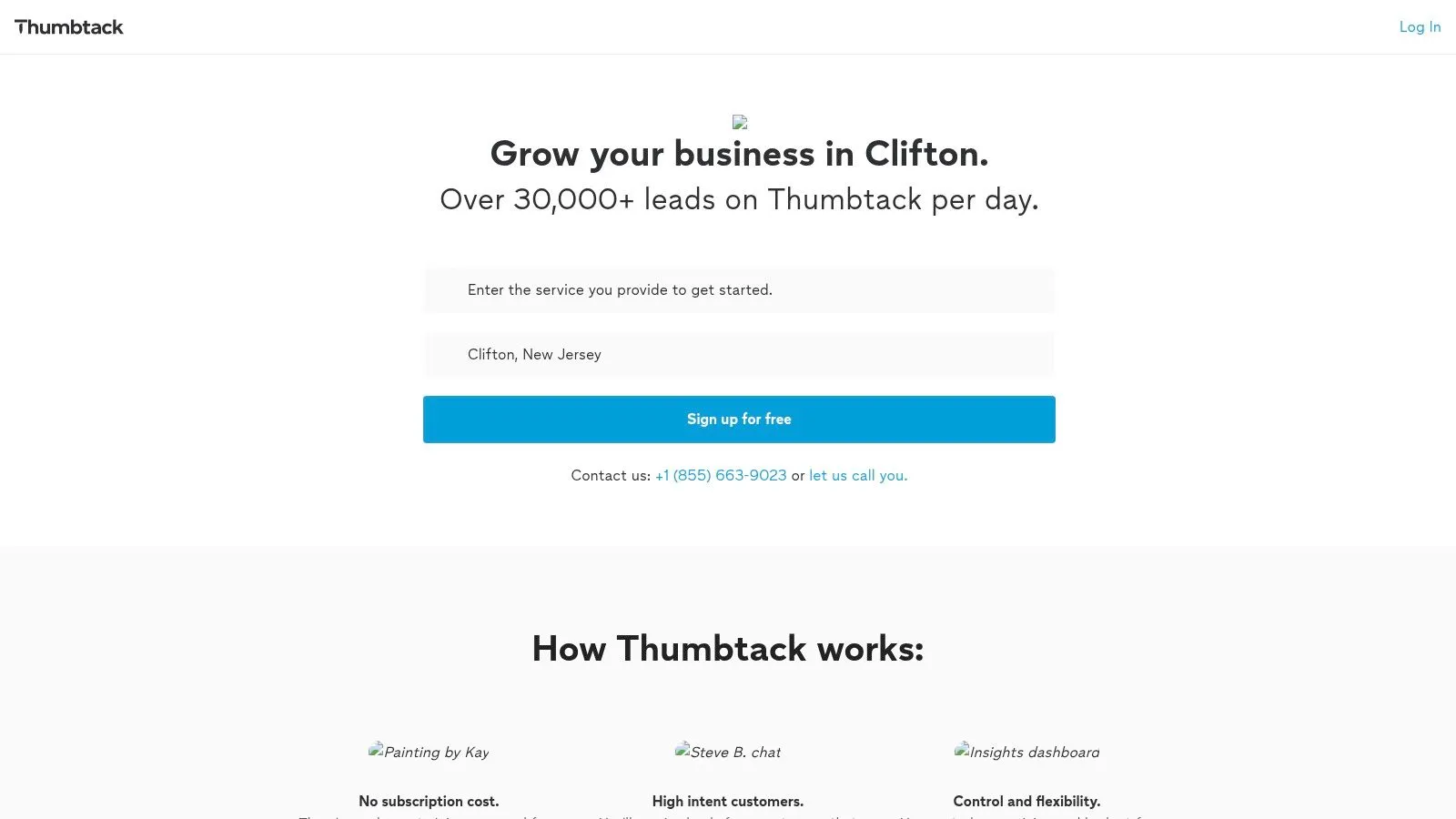
If you prefer inbound calls over form leads, Service Direct is easier to like than most marketplaces. It focuses on live phone calls, and that matters in restoration because urgent jobs often convert best on the first real conversation.
That doesn’t mean it’s cheap. It means the format is closer to how emergency service businesses sell.
Why call-first matters here
Service Direct emphasizes exclusive inbound call leads, call recordings, and a pay-for-valid-leads model. For restoration owners, exclusive calls are usually more useful than shared form fills because they shorten the gap between inquiry and dispatch.
This also lines up with a broader shift in lead generation. GrowthList’s 2026 roundup says companies combining content marketing and email outreach can see a 3x increase in lead volume compared with traditional outbound methods while reducing costs by 62%. The same roundup says 78% of companies use email for lead generation, 74% say high-quality content improved success, companies that blog generate 13x more leads, 42% cite email as their top lead generation tool, 79% of B2B marketers identify email as the most effective channel, and integrated systems can produce a 50% increase in sales-ready leads at a 33% lower cost (GrowthList lead generation statistics). The practical takeaway for restoration is simple. A pay-per-call source can help now, but owned content and follow-up systems usually improve lead quality over time.
The trade-off
Service Direct is strongest when your office knows how to answer, qualify, and book from the first call. If not, you’ll pay premium rates for opportunities your team can’t close.
- Exclusive format: Better for emergency work than recycled shared leads.
- Control: You can set geography and lead price targets.
- Volume varies: Some ZIP codes will be much better than others.
- Category pricing can be tough: High-intent restoration categories aren’t bargain channels.
If you’re comparing call marketplaces, this guide to pay per call for contractors is a useful companion.
Check the platform at Service Direct.
6. Networx
Networx is the kind of platform contractors often overlook until they need flexibility. It offers both shared and exclusive options, which makes it more testable than some one-model vendors.
That flexibility is useful in restoration if you’re disciplined. If you’re not, it can just become another source of noisy lead flow.
How to use it without wasting budget
The best way to use Networx is to treat it as a controlled experiment. Test a tight geography. Track close rate by lead type. Separate shared leads from exclusive leads in your CRM. Don’t throw it into the same bucket and hope the blended average works out.
Its delivery methods also help. Leads can come through live transfer, text, or email. Some are phone-verified. That gives your office options, especially if you already have defined intake scripts and after-hours handling.
One thing many buyers miss is that not all lead companies sell the same output. Some sell data at scale. ZoomInfo, for example, says its database includes more than 500 million professional contacts, 100 million company profiles, 135 million verified phone numbers, 120 million direct-dial numbers, 200 million verified business email addresses, and processes over 1.5 billion data points daily (ZoomInfo platform profile). That’s useful in outbound B2B prospecting. It’s not the same product as local inbound homeowner demand. Networx sits much closer to the latter.
- Best for controlled testing: Good if you want to compare shared versus exclusive without changing platforms.
- Needs strong intake: Multiple delivery formats help only if someone works them fast.
- Watch dispute rules: Budget flexibility is nice, but refund policies still matter.
You can review it at Networx.
7. Modernize Home Services (QuinStreet)
Modernize is better known in high-ticket home categories where homeowners research before they buy. That alone should tell you something. It’s usually not built around pure emergency behavior.
For restoration contractors, that makes it a situational fit, not a universal one.
Where it fits
If your company does more reconstruction, replacement, or adjacent project work after the emergency phase, Modernize can make sense. Its educational funnels and guided content model fit buyers who compare options before choosing a contractor.
That kind of demand is different from the frantic first call after a pipe burst. It’s slower. More research-heavy. More comfortable inside a shared-lead environment.
There’s also a data point worth keeping in mind about segmentation. CIENCE’s GO Data platform is reported to provide access to 140 million verified global contacts, and Bombora’s Company Surge intent data is positioned to help identify accounts researching relevant topics before outreach starts (Abstrakt’s lead generation company roundup). Different lead companies solve different timing problems. Modernize leans more toward researched demand than emergency dispatch demand.
Where it usually doesn’t
If your core goal is immediate water mitigation, board-up, or fire-damage response, Modernize can feel too slow and too shared. The buyer often isn’t in full research mode. They just want a truck.
That’s why I’d place it lower on the list for a pure restoration operator. It can support a broader business. It usually won’t outperform call-first or owned-search channels for urgent work.
If the job depends on being first to answer, favor channels built around immediate contact, not long research funnels.
You can learn more at Modernize for Pros.
Top 7 Lead Companies Comparison
| Product | Implementation Complexity 🔄 | Resource Needs & Speed ⚡ | Expected Outcomes ⭐📊 | Ideal Use Cases 💡 | Key Advantages ⭐ |
|---|---|---|---|---|---|
| FirstMention | Medium–High, custom setup and integrations across search, AI, tracking | Moderate ongoing effort (site/content/GEO/schema) + founder strategy calls; variable cost (custom pricing) | Compounded organic & AI visibility; steady increase in booked jobs over time | Owner‑led local home‑service businesses wanting single integrated system | End‑to‑end owned system; AI visibility focus; operator-built with measurable tracking |
| Google Local Services Ads (LSA) | Low–Medium, verification and category setup required | Pay‑per‑lead budget; requires fast response to maximize ROI | High intent leads with predictable per‑lead billing; performance varies by market | Emergency/intent-driven home‑service jobs (plumbing, HVAC, electrical) | Prominent placement; Google Guaranteed trust; pay‑only‑for‑valid‑leads model |
| Angi Leads (HomeAdvisor) | Low, sign-up and lead budget controls | Pay‑per‑lead; shared leads require fast follow‑up; budgeting via app | Steady near‑term demand possible; conversion drops if slow or uncompetitive on price | Pros needing immediate volume and broad ZIP coverage | Large consumer reach; clear in‑app billing and controls |
| Thumbtack for Pros | Low, profile setup and pay‑per‑contact configuration | Pay‑per‑contact with daily budgeting; fast quoting required; limited integrations | Good for incremental jobs; conversion tied to speed and profile strength | Responsive, review‑rich local pros who can quote quickly | Flexible, transparent day‑to‑day pricing; large consumer base |
| Service Direct (Pay‑Per‑Call) | Low–Medium, campaign/price setup and quality controls | Higher CPL for exclusive live calls; requires phone/booking readiness | Higher booking rates from exclusive, live inbound calls | Businesses that convert well from phone leads and want exclusivity | Exclusive live calls; call recordings; transparent pricing and credits |
| Networx | Low, choose shared or exclusive plans and delivery methods | Prepaid credits; manage volume and fast follow‑up; variable costs by category | Variable; can test shared vs exclusive to find volume/ROI balance | Contractors who can handle volume and competitive follow‑up | Multiple delivery methods (transfer/text/email); budget control |
| Modernize (QuinStreet) | Low–Medium, account tuning for high‑ticket funnels | Higher effort to respond rapidly to researched buyers; dynamic pricing | Qualified, higher‑ticket project leads but typically shared; higher AOV potential | Replacement/remodel projects (HVAC, roofing, windows, solar) | Focus on high‑ticket verticals; educational funnels that attract researched buyers |
Own Your System, Don’t Just Rent Leads
A long lead list can hide a weak business.
Restoration work is won on speed, trust, and how well your team handles urgency. A vendor can send calls or form fills, but it cannot fix missed calls, slow estimates, weak local visibility, or poor follow-up. If those gaps stay in place, higher lead volume usually means higher waste.
Lead companies still have a place. They help cover slow periods, test a new market, or keep crews busy after seasonality shifts. The mistake is judging them by cost per lead instead of cost per booked job. In restoration, a cheap shared lead that never turns into signed work costs more than an expensive exclusive call that books fast.
That trade-off matters more in emergency categories than in standard home services. Water, fire, and mold jobs often go to the first credible company that answers, qualifies the loss, and gets a technician moving. If the lead is shared, response speed becomes a tax on your team. If the lead is exclusive but overpriced, margin disappears unless your intake process is tight.
A better setup is simple:
- Use vendors to fill specific gaps: Buy leads where you need coverage, not as your whole growth plan.
- Invest in direct demand: Build visibility in Google Search, Maps, and AI-driven discovery so more jobs come to you first.
- Fix lead handling: Tighten call answering, dispatch handoff, text-back, and estimate follow-up.
- Measure booked jobs and margin: Compare channels by revenue, close rate, and job quality, not raw lead count.
The best lead company for a restoration contractor depends on the problem you need to solve. Shared marketplaces can create volume. Exclusive calls can improve close rates. LSAs can work well in the right market. But the strongest model is still an owned system that brings in direct demand and lets you use vendors selectively, on your terms.
If you want fewer shared leads and more control over where jobs come from, FirstMention is a strong option, as noted earlier. It is built around owned visibility and the systems behind booked work, not just lead delivery. For restoration owners who care about exclusivity, lead quality, and cost per job, that is the better long-term play.