Find the Best PPC Agency Tampa for Your Restoration Business
Find the ideal ppc agency tampa for your restoration business. Learn key questions, pricing, KPIs, & contract red flags to book more jobs.

You’re probably in one of two spots right now.
Either you’ve already spent money on Google Ads and the results felt thin. The clicks came in, maybe a few forms too, but the booked restoration jobs didn’t follow. Or you’re talking to agencies in Tampa and every proposal sounds polished, vague, and built around traffic instead of revenue.
That’s the trap. A restoration company doesn’t need “more visibility” in the abstract. You need the phone to ring with urgent, local jobs your team can effectively book, dispatch, and collect on.
Table of Contents
- Why Most PPC Fails for Restoration Companies
- Vetting an Agency’s Strategy and Process
- Understanding Tampa PPC Agency Costs and Terms
- Must-Have Tracking and Real-World KPIs
- Local Nuances Your PPC Agency Must Understand
- Your Next Step Choosing a PPC Partner
Why Most PPC Fails for Restoration Companies
Most PPC failures don’t start in Google Ads. They start after the lead comes in.
A lot of Tampa restoration owners assume the answer is more traffic, more keywords, or a bigger budget. Usually it’s not. Data shows 60% of home-service leads are lost due to poor follow-up or missed calls, not lack of ads, and many agencies still focus on clicks while ignoring missed-call text-back, AI intake, or reactivation tied to ad spend, as noted by this Tampa PPC analysis.

If your team misses calls at night, lets web forms sit, or has no process for turning unbooked leads back into conversations, the ad account isn’t your biggest problem. The account may still need work. But the leak is usually downstream.
Practical rule: Don’t hire a PPC agency in Tampa until they talk about what happens after the click.
The click is only the start
Restoration is different from slower sales cycles.
A homeowner with water damage or storm damage isn’t browsing for fun. They want help now. That means your ad, landing page, phone flow, dispatch process, and follow-up have to work as one system. If one part breaks, the cost of every lead goes up.
Here’s what usually goes wrong:
- Calls go unanswered: Especially after hours, on weekends, or during spikes in demand.
- Forms aren’t handled fast enough: Emergency buyers won’t wait around for a callback.
- Campaigns mix intent: Urgent water extraction gets lumped together with slower estimate traffic.
- Reports obscure the actual problem: Agencies show impressions, clicks, and click-through rate while booked jobs stay flat.
What matters more than traffic
A good agency should care less about “more leads” and more about bookable leads.
That means asking basic operational questions early. Who answers the phone? How are calls routed? What counts as a qualified job? Which jobs are high-margin? Which zip codes are worth pushing harder? If an agency never asks those questions, they’re probably running a generic account.
You’re not buying clicks. You’re buying a chance to book profitable jobs faster than the next company.
That’s the lens to use for every agency conversation from here on out.
Vetting an Agency’s Strategy and Process
Most agency sales calls sound strong until you ask specific questions.
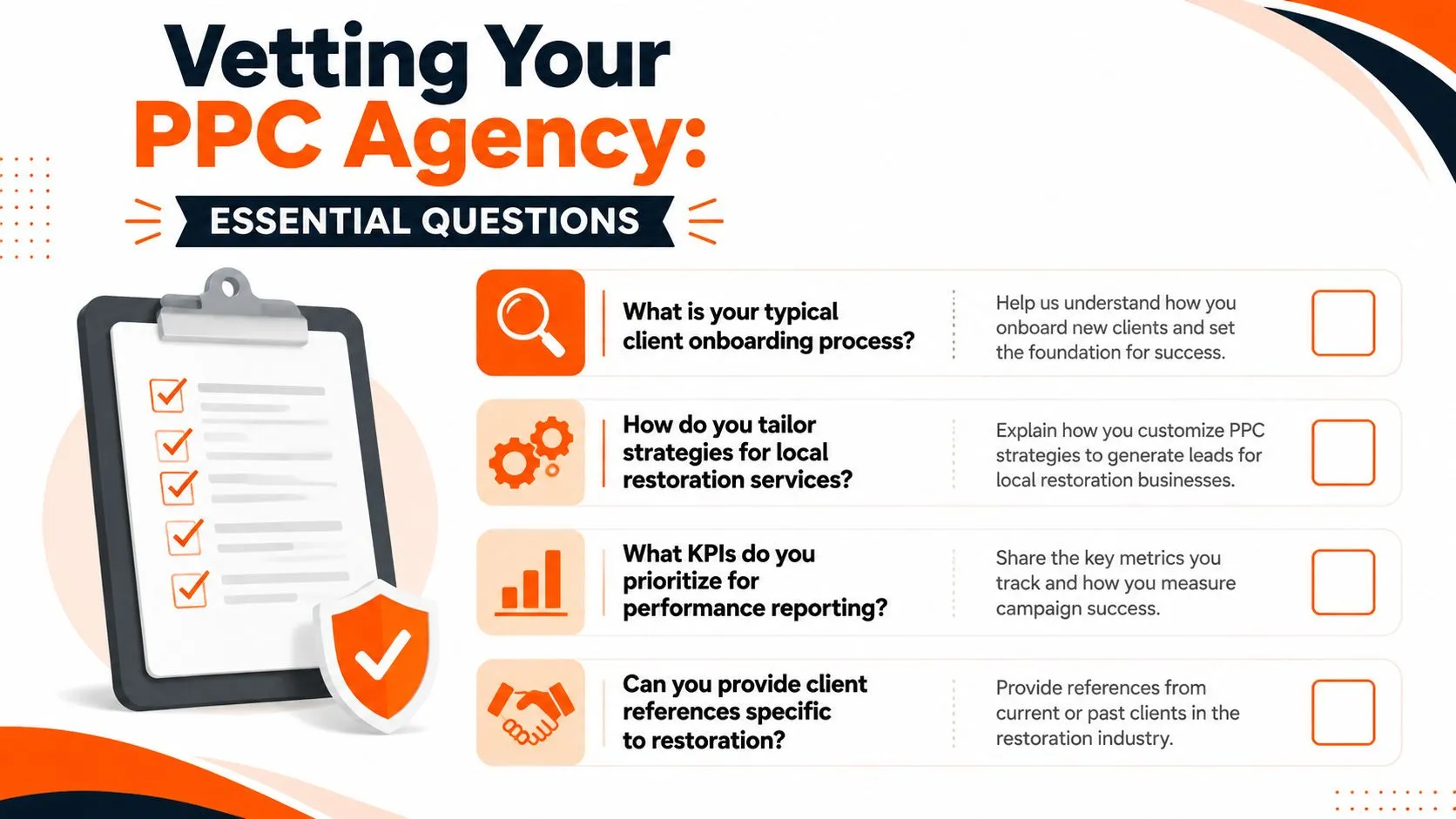
The fastest way to spot a weak PPC agency in Tampa is to stop asking broad questions like “Do you work with contractors?” and start asking process questions they can’t dodge. Good operators can walk through their logic. Weak ones talk in slogans.
Ask how they build the numbers
Start with economics, not ads.
Top agencies use a reverse-engineered revenue mapping methodology, starting with your sales cycle and close rate to calculate a maximum affordable cost-per-lead, with the focus on CPL instead of chasing a cheap CPC. If they can’t explain that in plain English, they’re not thinking like an operator.
Ask questions like these:
-
How do you calculate our max affordable cost per lead?
They should work backward from average job value, close rate, and margin. -
What counts as a qualified lead in your reporting?
“A call” is not enough. A junk lead and a real emergency loss are not equal. -
How do you separate branded traffic, emergency traffic, and estimate traffic?
These should not all sit in one bucket. -
What would make you cut a keyword even if it gets clicks?
The right answer is lead quality, not just spend.
A strong owner should also understand the basics well enough to challenge a proposal. If you want a useful outside framework before those calls, this guide on how to master your PPC campaigns gives you a solid way to think about account audits and reporting.
Ask how they separate emergency from estimate traffic
Restoration buyers don’t all search with the same intent.
Someone looking for “emergency water damage cleanup” behaves differently from someone looking for mold inspection pricing. A real agency should split campaigns, ad copy, landing pages, and call handling around that difference.
Ask them:
- Which services would you isolate into their own campaigns first?
- How do you write ads for urgency versus education?
- Do you build different landing pages for emergency calls and slower quote requests?
- How do you handle search terms that sound local but bring weak intent?
If they answer with generic talk about “optimizing over time,” keep pushing.
For a broader look at contractor marketing systems beyond just ads, this piece on contractor digital marketing is useful because it frames PPC as part of the whole demand and booking process.
A video walkthrough can also help you hear how agencies talk when they aren’t hiding behind a slide deck:
Ask what happens after hours
Many campaigns often falter at this point.
If your ads run at night but nobody reliably answers, the agency should have a plan. Maybe that means call routing, a live answering process, tighter schedules, or a follow-up workflow for missed calls. The exact setup can vary. What matters is that they bring it up before you do.
If an agency treats lead handling as “your side” and ad spend as “their side,” you’ll end up paying for the gap.
The best strategy conversations feel operational, not promotional.
Understanding Tampa PPC Agency Costs and Terms
Money should be clear before anything launches.
A serious PPC agency in Tampa isn’t cheap, and that’s fine if the work is tied to booked jobs, tracking, and account control. The problem isn’t the fee by itself. The problem is paying real money into a setup you don’t own and can’t evaluate.
How agencies usually charge
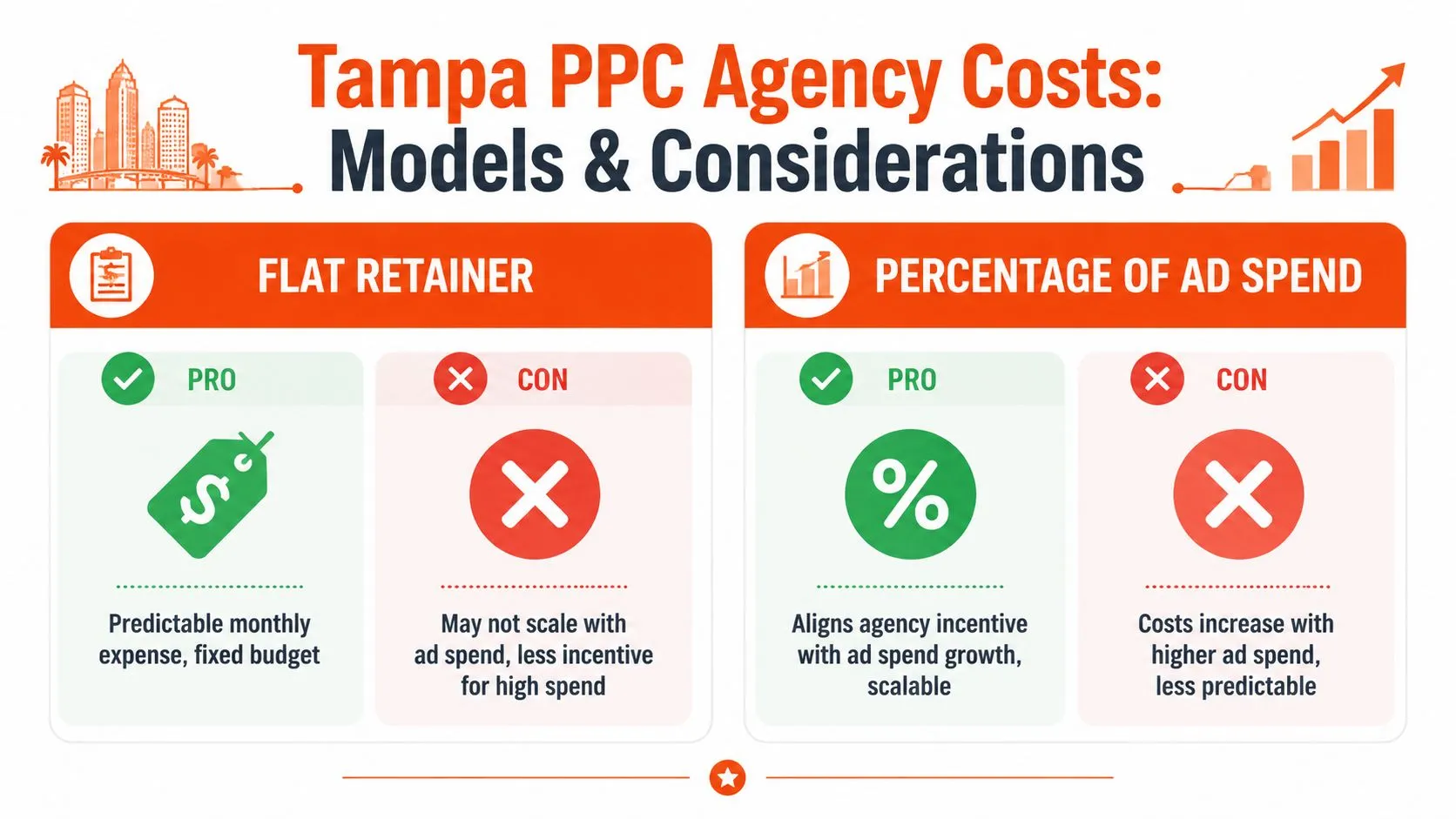
A top PPC agency in Tampa typically charges between $2,500 and $10,000 per month as a flat fee, or 10% to 20% of monthly ad spend, according to Percepture’s Tampa PPC pricing breakdown.
That usually shows up in two models:
| Model | Good fit | Trade-off |
|---|---|---|
| Flat retainer | Better when you want a predictable monthly fee and a defined scope | It may not flex well if spend jumps fast or the account gets more complex |
| Percentage of ad spend | Better when spend changes often and campaign volume scales | Agency cost rises with spend, so you need stronger controls around efficiency |
Neither model is automatically better.
A flat fee can protect your budget. A percentage model can make sense when campaign management expands with spend. What matters is whether the agency ties its decisions to acquisition cost and lead quality, not to growing your spend for its own sake.
If you’re comparing ad channels and call-driven buying behavior, this explainer on pay per call marketing helps clarify when a phone-first lead strategy makes sense for service businesses.
Contract terms that matter more than the fee
The contract can hurt you more than the price.
Look for these points before you sign:
- Account ownership: Your Google Ads account, conversion history, landing pages, and tracking setup should stay under your control.
- Exit terms: Month-to-month terms are common with strong agencies. If they need a long lock-in to keep clients, that tells you something.
- Reporting language: The agreement should say what gets reported and how often. Vague “performance updates” aren’t enough.
- Creative and tracking access: You should be able to see ad copy, keyword structure, GA4 data, and call tracking outputs.
- Exclusivity limits: Be careful with broad language that blocks you from using other vendors for SEO, CRM, call handling, or web work.
A cheap contract with bad ownership terms can cost more than an expensive agency with clean handoff terms.
One more thing. If the agency insists on building everything inside accounts you can’t access, walk away. You’re funding the data. You should keep the asset.
Must-Have Tracking and Real-World KPIs
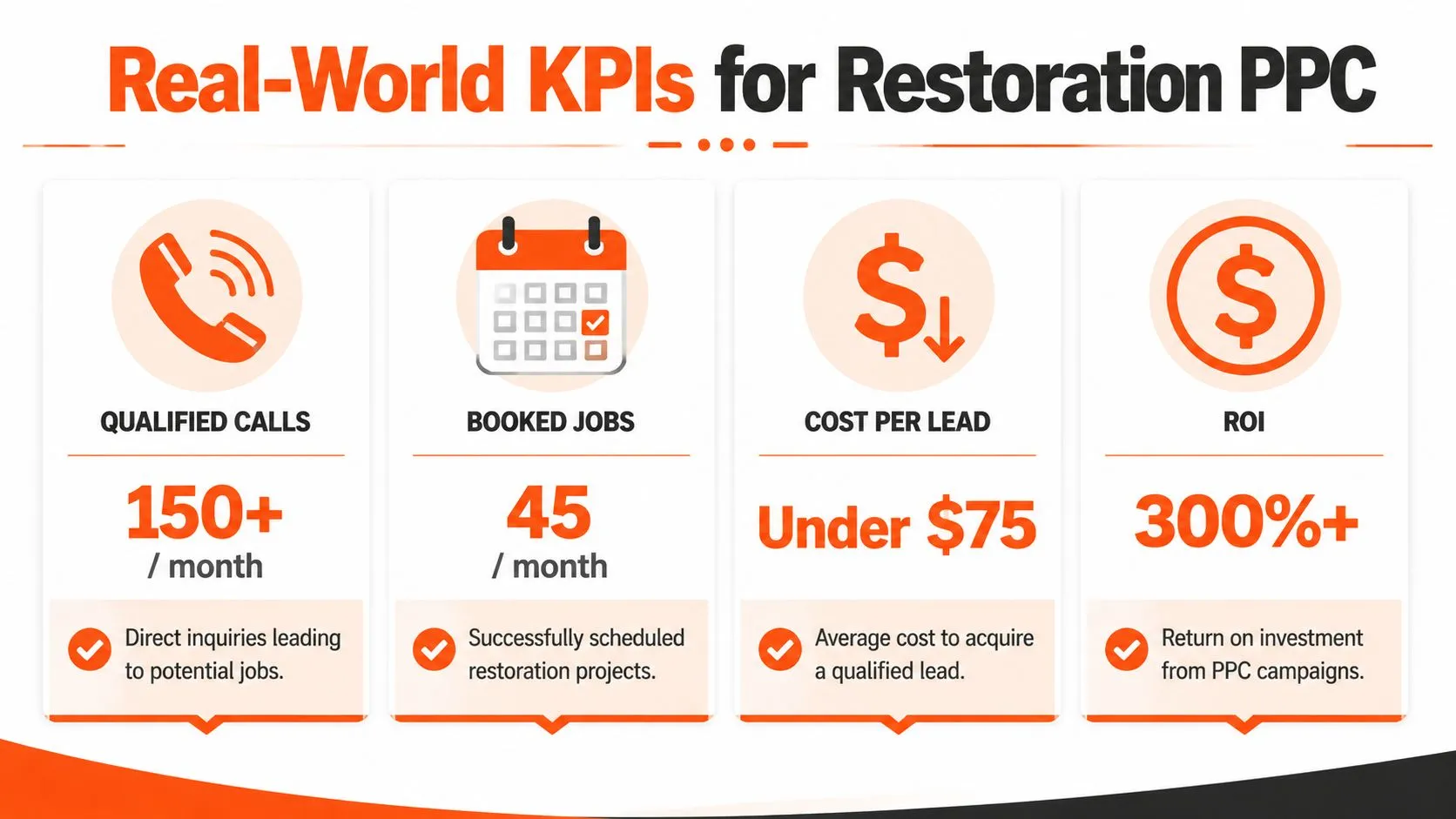
A restoration PPC report should tell you one thing clearly. Did the spend produce qualified calls and booked work?
If the first page is packed with impressions, clicks, and click-through rate, you’re looking at surface metrics. Those numbers can help diagnose issues inside the account, but they should not lead the conversation. Your business runs on jobs, not dashboards.
What a real report should show
You need a short list of KPIs that connect spend to revenue reality.
The average PPC conversion rate for paid ads in 2024 was 2.35%, while successful Tampa PPC agencies often reach 6.96% or higher by focusing on pipeline and revenue reporting through integrated call tracking, GA4, and CRM systems rather than vanity metrics, based on the benchmark context in Reboot Online’s PPC statistics roundup.
That doesn’t mean you obsess over conversion rate alone. It means you use it as a benchmark, then go deeper.
A useful report usually includes:
- Qualified leads: Not every caller counts. Spam, wrong numbers, vendors, and low-fit inquiries should be filtered out.
- Lead-to-booked-job rate: This tells you whether the problem is ad quality, phone handling, or sales follow-up.
- Cost per qualified lead: This matters more than a cheap click.
- Pipeline or revenue view: The report should connect campaigns to actual business outcomes where your systems allow it.
Field rule: Cost per click is a management metric. Cost per qualified lead is a business metric.
If an agency keeps steering you back to CPC, ask why. Cheap traffic is often low-intent traffic. In restoration, low-intent traffic burns time fast.
The tracking stack you should require
There’s no excuse for fuzzy attribution anymore.
At a minimum, a serious setup should include Google Tag Manager, GA4, call tracking, and CRM integration so every lead can be traced back to campaign, ad group, and keyword. Without that stack, a lot of “optimization” is guesswork.
Here’s the simple version of what each tool does:
| Tool | What you need it for |
|---|---|
| Google Tag Manager | Controls event tracking without making every change a dev project |
| GA4 | Gives session, landing page, and conversion path data |
| Call tracking | Shows which campaigns generated calls and helps qualify call outcomes |
| CRM integration | Connects lead source to booked job and revenue status |
For owners who want a straight explanation of how messy attribution gets in actual practice, this brutally honest conversion tracking guide is worth reading.
You should also expect the agency to explain how PPC fits alongside other search channels. This breakdown of SEO and PPC services is useful if you’re trying to decide what should produce demand now versus what should build long-term visibility.
A bad report says, “Traffic is up.”
A good report says, “These campaigns drove these qualified calls, these jobs were booked, and this part of the funnel needs work.”
Local Nuances Your PPC Agency Must Understand
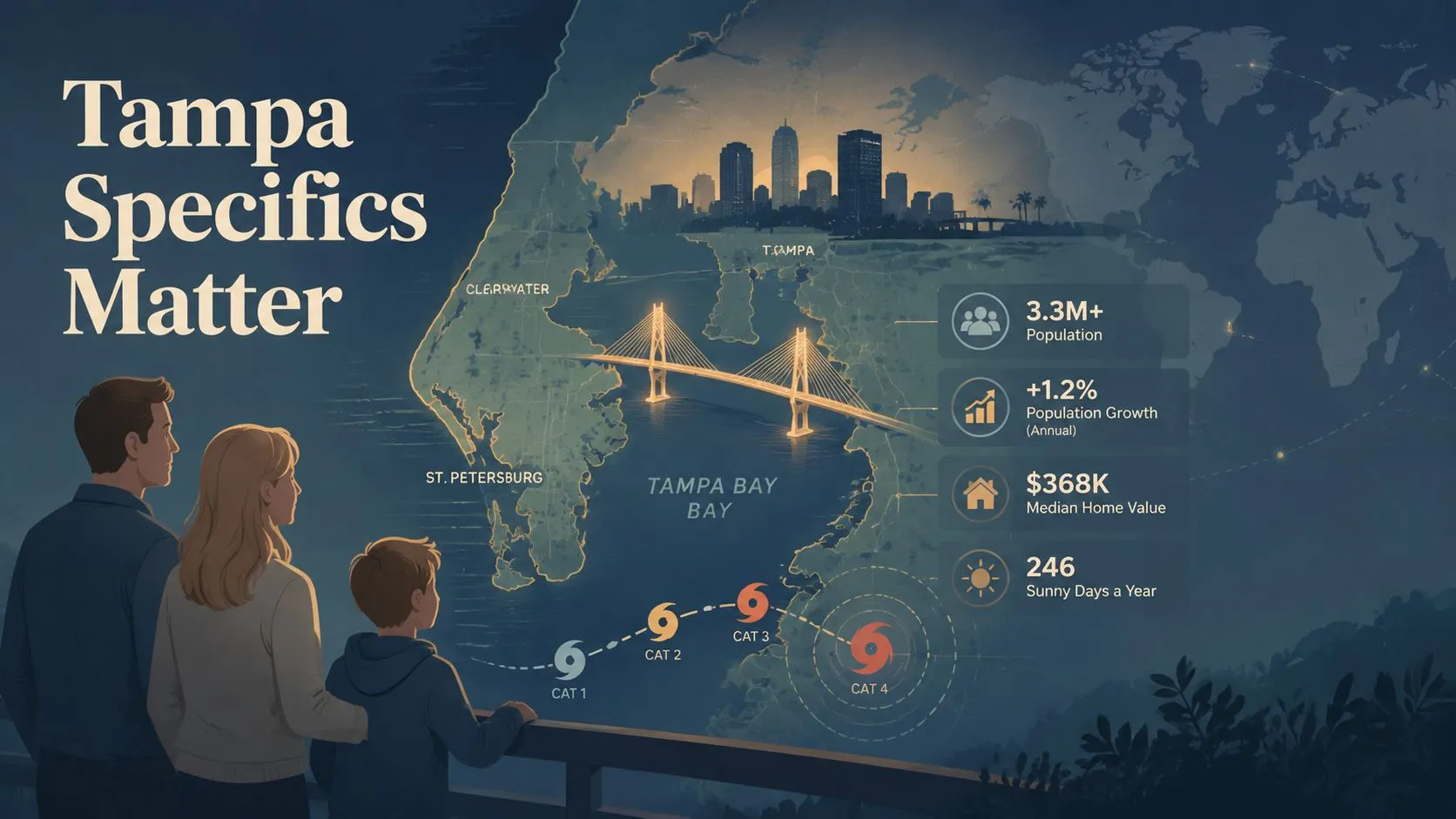
Tampa is not one clean market, and restoration is not one clean service line.
If an agency tries to run your account with a generic local-services template, you’ll feel it fast. Emergency water damage, storm cleanup, mold-related work, and fire restoration all behave differently. The search patterns, urgency, geography, and dispatch logic are not the same.
Mobile comes first in Tampa
A lot of restoration demand starts on a phone, not a desktop.
In Tampa, up to 68% of local service searches occur on mobile devices, which makes mobile-first ad layouts and prominent click-to-call buttons critical for emergency restoration leads, according to ROI Amplified’s Tampa PPC guide.
That should change how the agency builds everything:
- Ad copy should get to the point fast
- Landing pages should load cleanly on mobile
- Phone numbers should be obvious
- Forms should stay short
- Emergency offers should be visible without hunting
If your agency spends more time talking about desktop page design than call flow on mobile, they’re solving the wrong problem.
Tampa restoration demand is not one market
Local knowledge shows up in campaign structure.
South Tampa, Brandon, Riverview, Carrollwood, St. Pete, and nearby areas don’t always perform the same way. Travel time, competition, housing stock, storm exposure, and service mix all affect what a lead is worth. A strong agency should segment locations based on operational value, not just city names.
They should also talk naturally about seasonal shifts. Not with fake certainty. Just with common sense. Hurricane season changes urgency, search behavior, staffing pressure, and budget pacing. So does heavy rain. So do localized surges after storm events.
Good local PPC isn’t just geotargeting. It’s matching ad pressure to where your crews can respond profitably.
Ask one local question on every call: “How would you split emergency coverage and budget by area if call volume spikes?”
If they can’t answer that without drifting into buzzwords, keep looking.
Your Next Step Choosing a PPC Partner
At this point, you don’t need another pitch deck. You need a low-risk way to test fit.
The right PPC agency in Tampa should be willing to prove competence through process, visibility, and clean decision-making. You do not need to bet the whole quarter to find that out.
Option one paid discovery audit
This is the safer move if you already have campaigns running.
Pay the agency to audit the account, tracking, landing pages, call handling, and reporting setup before they touch spend. A good audit should tell you where the leaks are, which campaigns are salvageable, what tracking is broken, and what operational issues are suppressing performance.
Ask for these deliverables:
- A clear list of account issues
- Tracking gaps and attribution problems
- Campaign structure recommendations
- Landing page and call-flow findings
- A practical action plan with priorities
This route works well when you’ve been burned before. It lets you inspect how they think before you commit to ongoing management.
Option two short trial with hard rules
If you don’t have much existing data, a short trial makes sense.
Give the agency a limited test window. The key is structure. Agree on budget, ownership, reporting access, and what success means before launch. The early phase should focus on signal quality, not vanity wins.
The broader operating reality matters too. Initial movement often shows up in the first few weeks, but meaningful optimization usually needs 60 to 90 days as the systems learn and the account gets refined. That doesn’t mean you sit back blindly. It means you judge the agency on clarity, speed of iteration, tracking quality, and lead quality as the trial develops.
Use a checklist when comparing your final options:
| Decision point | What you want to hear |
|---|---|
| Strategy | They can explain your lead economics in plain English |
| Tracking | They insist on call tracking, GA4, GTM, and CRM visibility |
| Local fit | They talk about dispatch reality, mobile behavior, and area-level targeting |
| Reporting | They lead with qualified leads, booked jobs, and pipeline view |
| Terms | You keep account access and can exit cleanly |
Don’t choose the agency that sounds the smartest. Choose the one that makes it easiest to see what’s working, what isn’t, and what happens next.
A final gut check helps too. If the agency avoids your hard questions, rushes past contract details, or keeps selling outcomes without showing the system behind them, that’s your answer.
If you want help building the whole system instead of just buying more clicks, FirstMention helps home-service and trade companies connect search visibility, AI visibility, tracking, missed-call follow-up, intake, and reporting so more demand turns into booked jobs.