Sewage Backup in Bathtub: Your Immediate Action Plan
Facing a sewage backup in bathtub? Get immediate steps to stop the flow, protect your family, and clean up safely. Know when to call a plumber vs. restoration.
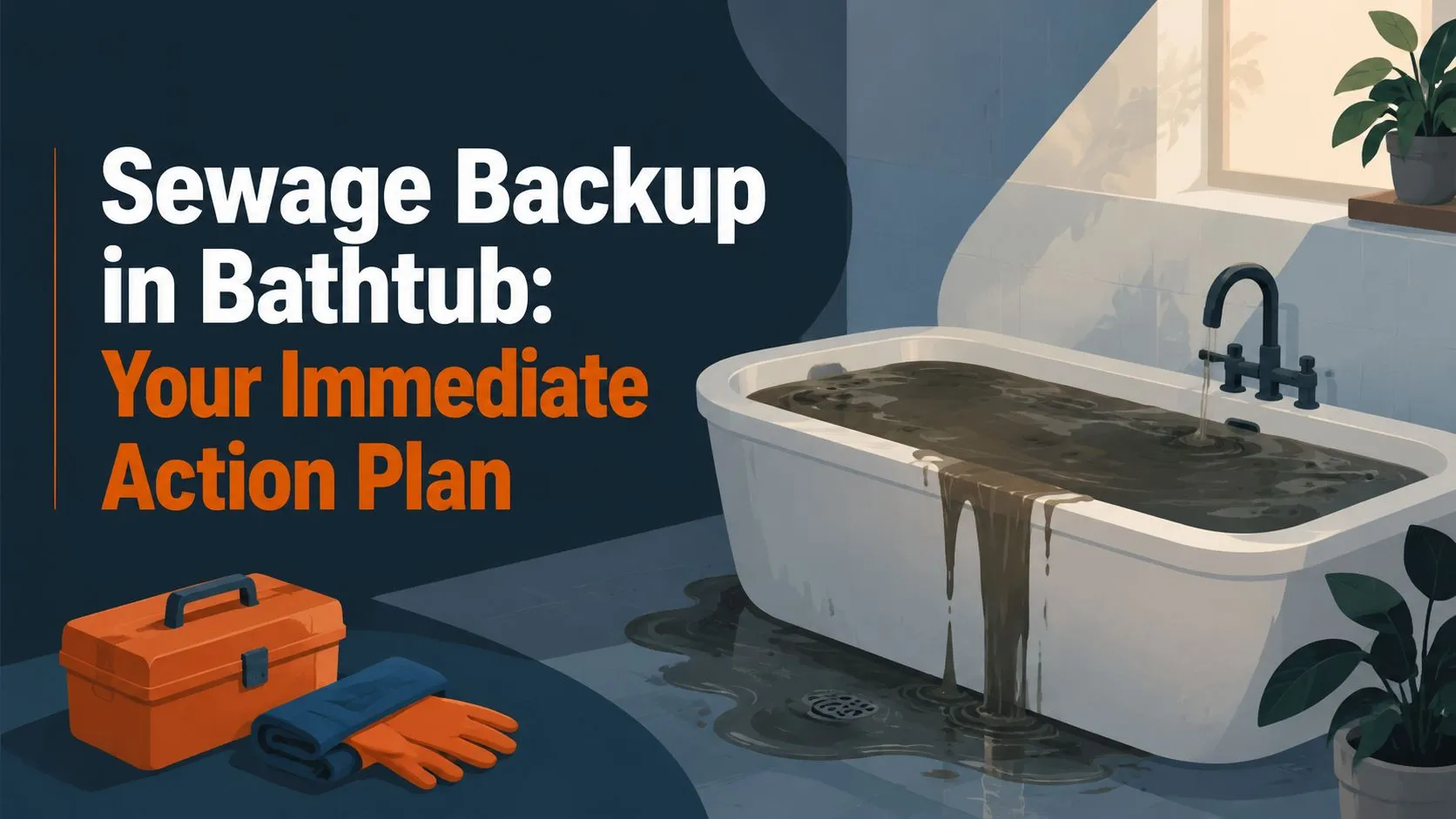

You flush the toilet, walk back into the bathroom, and there it is. Dark, foul water in the tub. Maybe it’s gurgling. Maybe it already crossed from gross to panic.
Treat it like a real emergency. A sewage backup in a bathtub usually means wastewater can’t get out through the main sewer line, so it comes back through the lowest drain in the house. That’s why the tub or shower is often where you see it first, as explained in this bathtub sewage backup overview.
Table of Contents
- Immediate Steps for a Sewage Backup in Your Tub
- Critical Mistakes to Avoid Right Now
- Health Risks and Essential Safety Gear
- A Guide to Safe Cleanup and Disposal
- Plumber vs Restoration Company Who to Call
- How to Prevent Future Sewage Backups
Immediate Steps for a Sewage Backup in Your Tub
Don’t test another drain. Don’t “see if it clears.” Start with damage control.
The first three moves
-
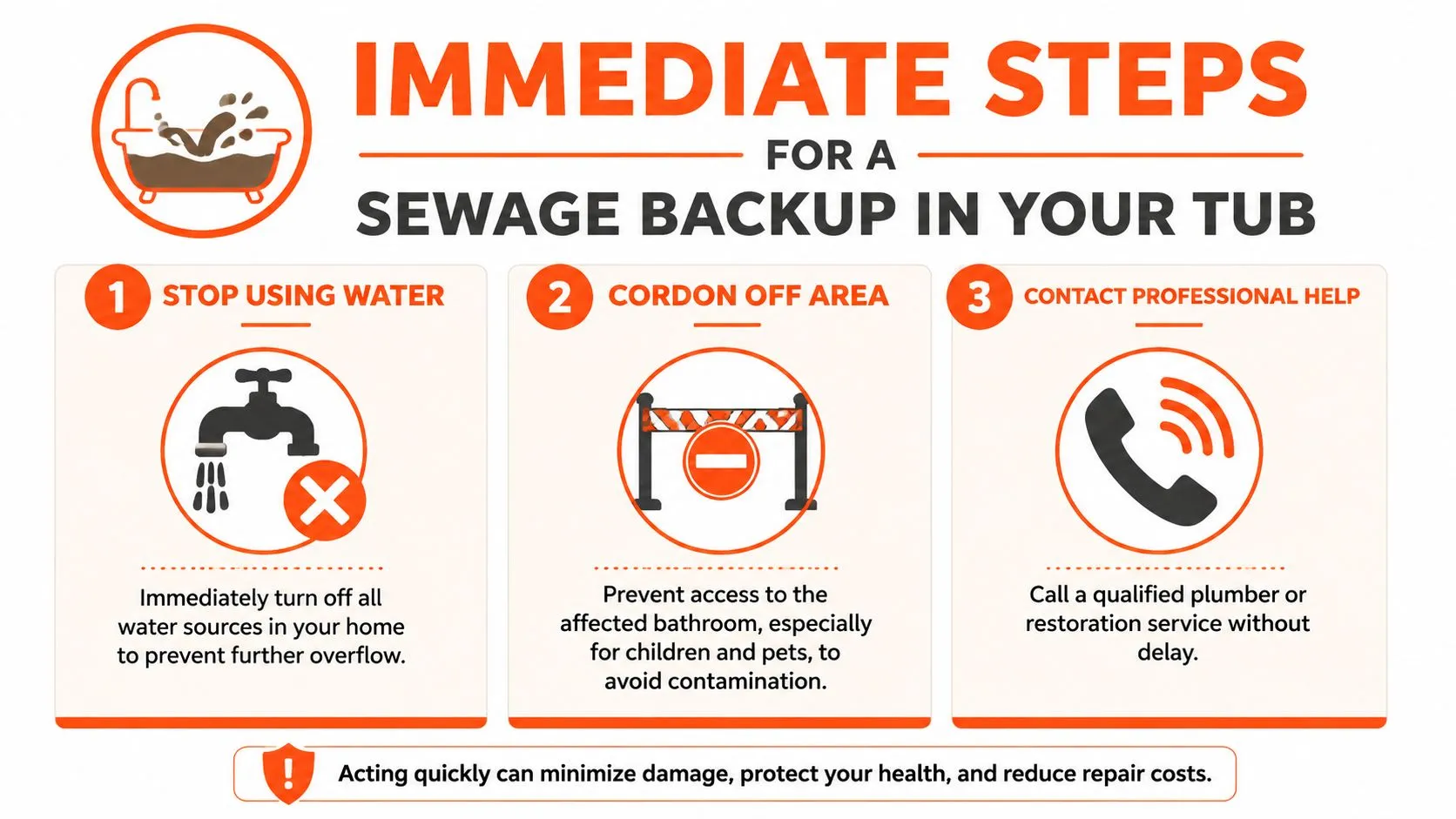
Stop using water everywhere
Turn off faucets. Don’t flush toilets. Stop the washing machine and dishwasher if they’re running. Any water you send into the system can come back out through the tub, floor drain, or toilet.
-
Block off the bathroom
Keep kids and pets out. Close the door if you can. Put down towels outside the room only if they stay dry and clean. Don’t let anyone track contaminated water through the house.
-
Call for help
If sewage is visible, call a plumber right away. If sewage has reached the floor, vanity, baseboards, drywall, or nearby rooms, you may need both a plumber and a cleanup crew. If you want a plain-language primer on drain issues before making that call, this guide to fixing blocked drains is useful background.
Why the tub fills first
Your bathtub isn’t the cause most of the time. It’s the exit point.
All the drains in the house feed into one main sewer line. When that line clogs, wastewater takes the path of least resistance and comes up through the lowest opening. In most homes, that’s the tub or shower drain.
Practical rule: If sewage is in the tub, assume the problem is bigger than the tub until proven otherwise.
Quick checks that help the pro
Before the plumber arrives, notice a few things from a safe distance:
- Other fixtures acting up: Does the toilet bubble? Do sinks drain slowly?
- Only one drain affected: If it’s just the tub, the issue may be local.
- More than one fixture backing up: That points toward a larger sewer line problem.
Those details help separate a branch-line clog from a main-line blockage. Minor localized clogs can sometimes respond to a plunger or hand-cranked snake, but the first priority is still containment and safety, not experimenting.
Critical Mistakes to Avoid Right Now
You walk back into the bathroom, and the level in the tub looks lower. That can fool people into thinking the danger has passed. In practice, it often means the wastewater found temporary space elsewhere in the line, or it drained just enough to back up again the next time someone uses a fixture.
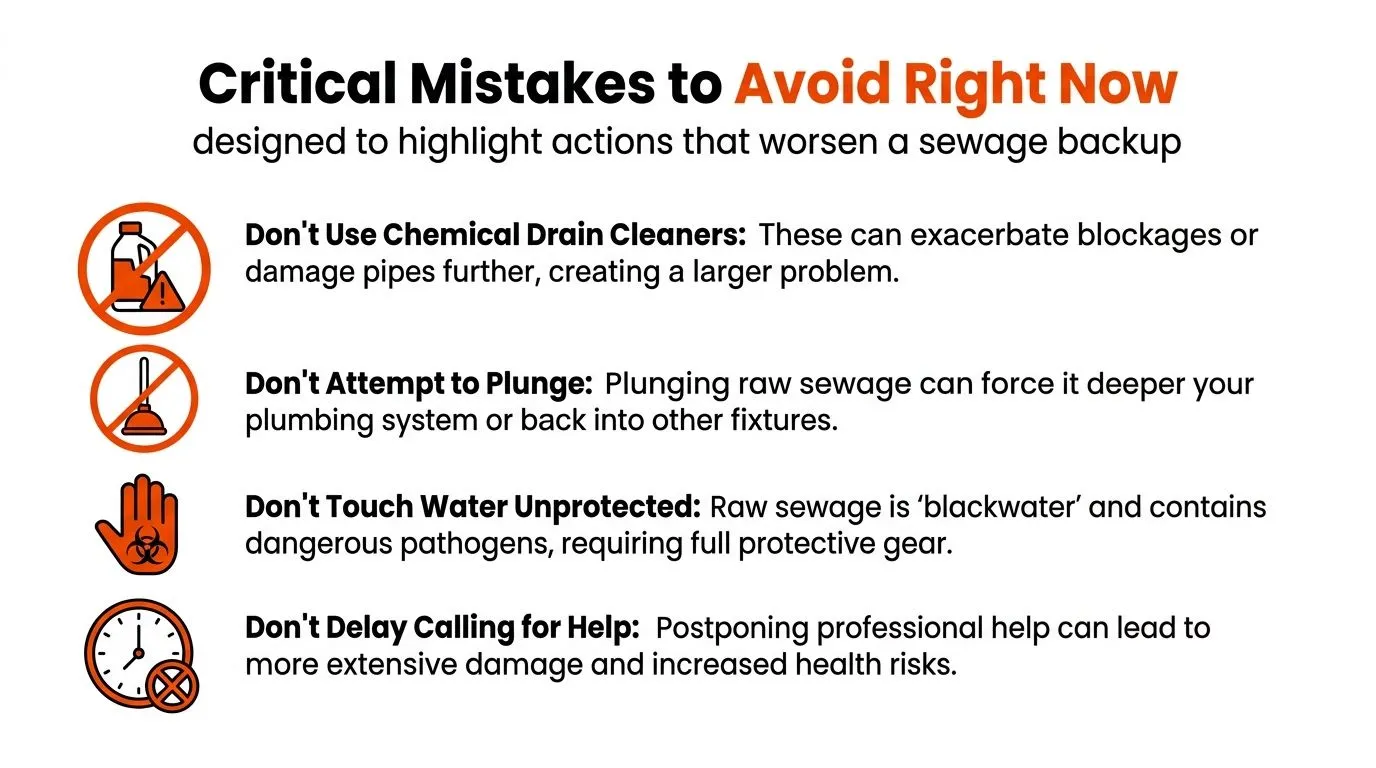
The biggest mistakes happen in the first hour. They usually come from trying to confirm whether the problem is “really that bad” or trying one quick fix before making a call. Both choices can turn a contained tub backup into a floor-level contamination job.
Stop doing these things
-
Don’t flush toilets or run more water
If the blockage is in the main line, every flush and every sink drain adds volume behind it. That extra water often shows up in the tub, shower, toilet base, or floor drain. If more than one fixture is involved, stop all water use and treat it like a whole-system problem until a plumber proves otherwise.
-
Don’t test fixtures one by one
Homeowners do this constantly. They run the bathroom sink, then the kitchen sink, then flush “just once” to see what happens. That test can answer the question, but it answers it by spreading sewage farther through the house.
-
Don’t pour chemical drain cleaner into a sewage backup
Drain cleaner is made for soap, hair, and light organic buildup in a normal drain line. It does very little against a blocked main sewer, and it can leave caustic liquid sitting in the trap or line for the next person who opens it.
-
Don’t use a plunger unless you’re confident it’s one isolated fixture
A plunger makes sense for a simple local clog. It is a poor bet when the tub is backing up because the toilet was flushed or because several drains are slow at once. In that case, plunging usually creates splash, not progress.
-
Don’t start wiping up sewage with household towels or a regular vacuum
Towels, bath mats, and mops spread contamination into other rooms. Standard shop vacs and household vacuums are also the wrong tool for blackwater. If wastewater reached drywall, trim, vanity kick plates, or adjacent flooring, the cleanup may already be beyond a basic plumbing call. That is when homeowners start looking for signs you need a mold remediation company, not just surface cleanup.
What usually works and what usually doesn’t
Here’s the practical split:
| Situation | Usually worth trying | Usually a bad bet |
|---|---|---|
| One slow tub drain, no other fixtures affected | Hand-cranked snake or careful plunging | Chemical cleaners |
| Multiple drains backing up | Professional diagnosis | DIY trial and error |
| Sewage on the floor or beyond the tub | Professional cleanup plan | “Mop it up later” |
That middle row matters. If the tub backs up when the washing machine drains, or the toilet bubbles when a sink runs, the problem is often in the main building drain or sewer lateral. At that point, guessing costs time and can muddy the bigger question of who is responsible. The plumber needs a clear picture of which fixtures triggered the backup. If the issue appears to involve the sewer lateral outside the home, that detail also helps sort out whether the blockage is on your property or farther downstream on the city side.
Delay creates a second problem
The first problem is the blockage. The second is material damage.
Sewage that sits around the tub base, under vinyl flooring, or against painted trim does not stay put. It wicks into porous material, leaves odor in hidden spaces, and turns a drain stoppage into a restoration job. A fast plumbing visit may solve the backup itself. Waiting can mean flooring removal, baseboard removal, and drying equipment on top of the plumbing repair.
If the sewage crossed the tub edge, stop trying to “manage it” and start documenting it. Clear photos, a list of affected rooms and fixtures, and the timing of each symptom help the plumber and, if needed, the restoration crew make the right call faster.
Health Risks and Essential Safety Gear
This isn’t dirty bathwater. It’s blackwater. That means human waste and drain contaminants are mixed into it, and you should treat it as unsafe on contact.
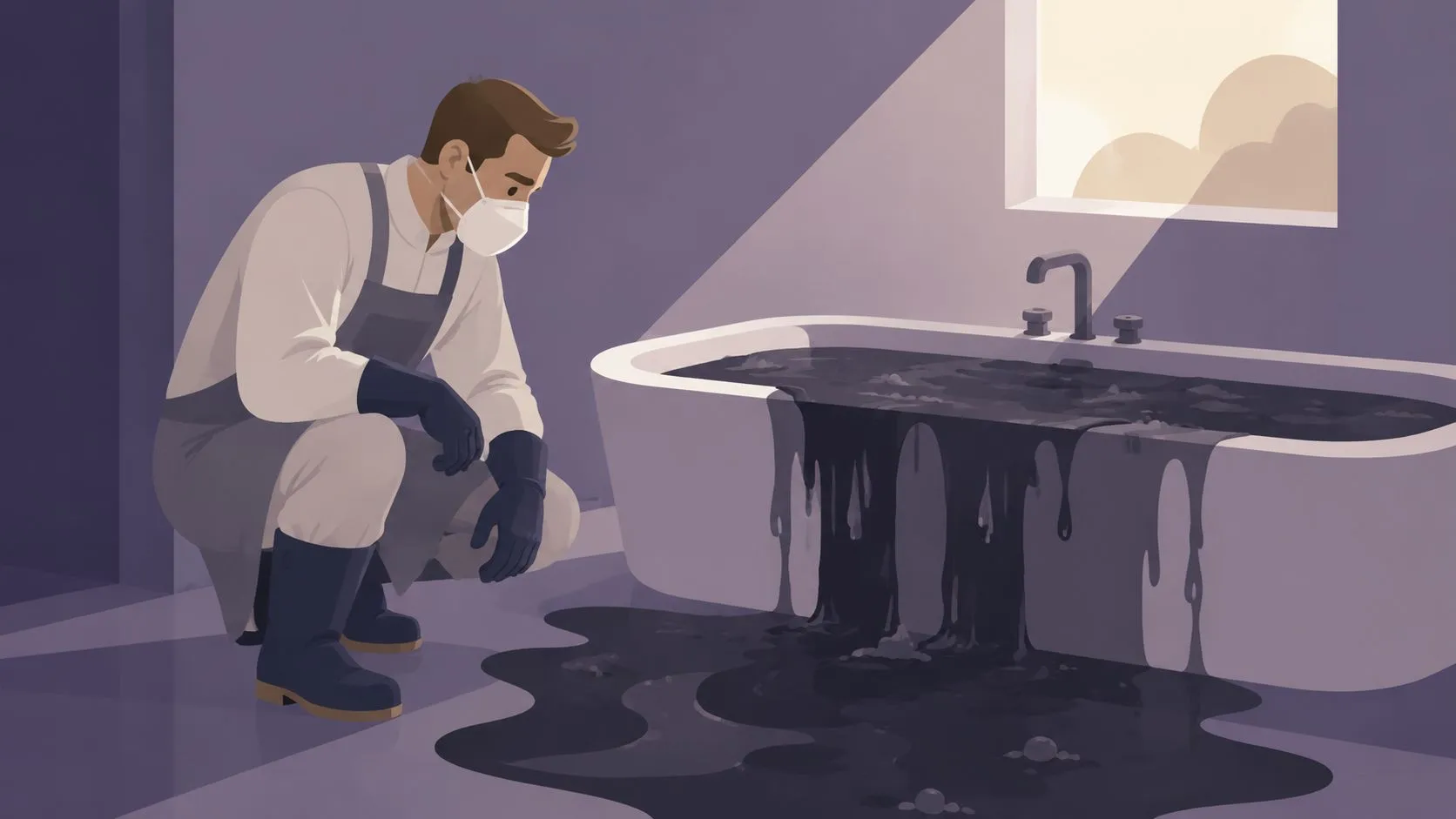
If you must enter the area before help arrives, gear up first. Bare hands, socks, and a paper dust mask are not enough.
Minimum gear before touching anything
- Non-porous gloves: Nitrile or heavy rubber gloves.
- Rubber boots: Ones you can disinfect. Not sneakers.
- Waterproof coveralls: Disposable coveralls are better than old clothes.
- Eye protection: Safety goggles or sealed protective glasses.
- N95-rated mask: Useful if you’re near splashing, aerosols, or disturbed residue.
Why this matters
Sewage can expose you to harmful bacteria, viruses, and parasites. You don’t need a dramatic flood for it to be a health issue. A small spill around the tub still contaminates surfaces, grout lines, bath mats, and anything absorbent nearby.
Items like towels, fabric shower curtains, cardboard boxes, and soft bath rugs often aren’t worth saving if they’ve soaked up sewage. Once contamination gets into porous material, proper recovery gets a lot harder.
Wear gear before you step in. Cleanup mistakes start with one quick barefoot look.
Mold can become the next problem
Once sewage sits, moisture gets into trim, drywall, cabinet toe kicks, and subfloor seams. Even after the blockage is cleared, trapped moisture can keep causing problems. If you’re trying to understand when post-backup drying turns into a bigger indoor air issue, this guide on mold remediation companies near me gives a useful overview of what pros do.
A short visual can also help if you’re trying to judge the level of danger and response:
One more caution
If anyone in the home has a weakened immune system, keep them well away from the affected area. Same for small children. Don’t gamble on “it’s probably fine” with sewage.
A Guide to Safe Cleanup and Disposal
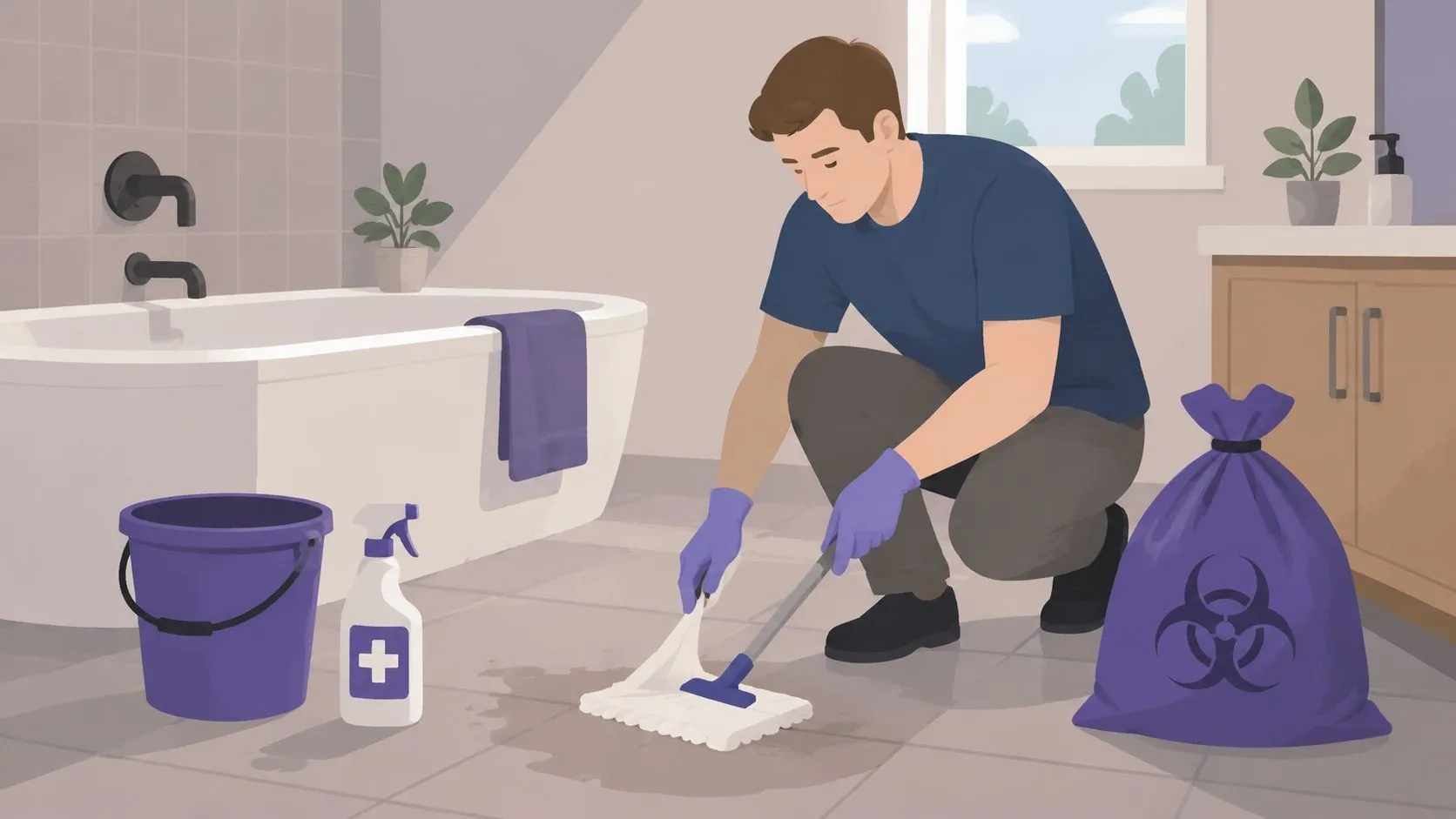
Only clean this yourself if the backup was small, contained, and fully stopped. If sewage reached multiple rooms, soaked cabinets, got under flooring, or sat for hours, call a restoration company.
For a minor incident, the order matters. Remove. Clean. Sanitize. Dry.
What to throw out first
Start with items that can’t be disinfected well.
- Absorbent floor items: Bath mats, rugs, and towels.
- Paper products: Toilet paper packs, tissues, cardboard packaging.
- Soft storage items: Fabric bins, wicker baskets, and similar materials.
Bag contaminated waste securely before carrying it through the house.
Clean first, then sanitize
A lot of homeowners jump straight to disinfectant. That’s backwards. Visible grime has to come off first or the sanitizer won’t contact the surface properly.
-
Remove standing water carefully
Use disposable rags, absorbent pads, or equipment you can disinfect. Don’t use your regular household mop and then put it back in the closet.
-
Wash hard surfaces
Scrub the tub, tile, nearby floor, base of the toilet, and lower wall areas if splashed. Use a standard cleaner that’s appropriate for the surface.
-
Sanitize after cleaning
Follow the product label exactly. Don’t mix cleaners. Especially don’t mix anything in a way that creates harmful fumes.
-
Dry the area completely
Open windows if weather allows. Run the bathroom fan if it doesn’t spread odor into the home. Use portable fans only if they won’t blow contamination into clean areas.
What homeowners often miss
The hidden trouble spots are usually:
| Area | Why it matters |
|---|---|
| Baseboards and trim | Sewage wicks into seams |
| Vanity toe kicks | Moisture gets trapped under cabinets |
| Caulk lines | Residue stays in creases |
| Adjacent hallway flooring | Shoes can carry contamination out |
If your insurer pushes back on damage that clearly followed the event, it helps to understand the claims side before you answer in writing. This article on How to appeal a denied water claim is a practical reference.
You should also understand when a cleanup crosses into full restoration work. This overview of storm damage restoration is about storm loss, but the drying and material-removal logic is similar when contaminated water affects building materials.
Clean-looking is not the same as sanitary. Sewage cleanup fails when people stop after the smell fades.
Plumber vs Restoration Company Who to Call
You walk into the bathroom, the tub is filling with foul water, and now you have two problems. One is the blocked sewer line. The other is contaminated material in the room. Those are different jobs, and calling the right company first saves time, money, and avoidable damage.
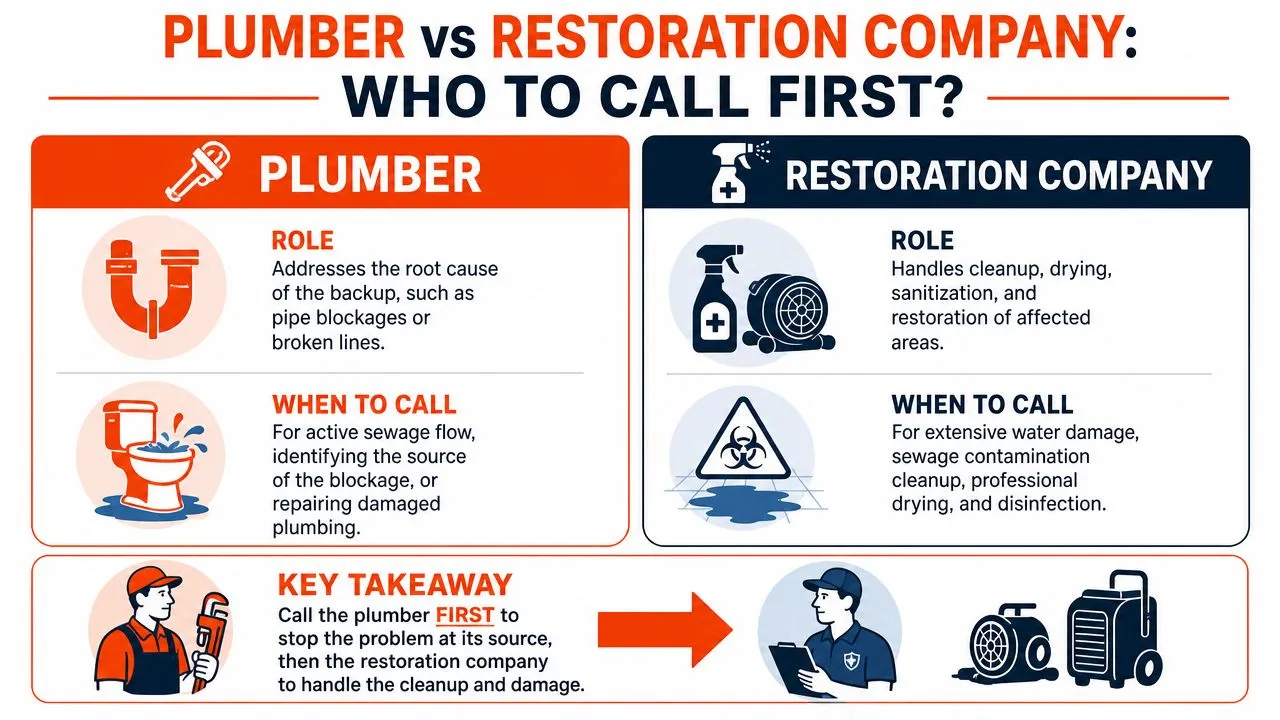
A plumber deals with the source. A restoration company deals with what sewage touched after the backup happened. In a live backup, start with the plumber unless standing sewage has already spread into other rooms and created a larger contamination problem.
Call a plumber first when
A plumbing call comes first if the system is still backing up or you do not yet know where the blockage is.
Call a plumber if:
- The backup is still active
- More than one fixture is affected
- The toilet, tub, or floor drain backs up together
- You need the line diagnosed
- You need the cleanout opened or the sewer line scoped
The pattern of the backup matters. If only the tub is slow or backing up, the clog may be on a branch line serving that bathroom. If the tub backs up when you flush a toilet or run another fixture, that points more strongly to a main line problem. A plumber can test that quickly, open the cleanout safely, and use a camera if needed.
Call a restoration company when
Restoration work starts after the flow is stopped or controlled. Their job is not to clear the sewer. Their job is to remove contaminated water, dispose of unsalvageable material, clean, disinfect, and dry the structure so the room can be used safely again.
Bring in a restoration company if sewage reached:
- Bathroom flooring
- Drywall or trim
- Cabinet bases
- Adjacent rooms or hallway materials
- Porous contents such as rugs, bath mats, or stored items
Homeowners often lose time by calling only one side. If a plumber clears the line but sewage sat under vinyl, wicked into baseboards, or soaked cabinet toe-kicks, the hazard is still there. If a restoration crew arrives before the line is stabilized, cleanup can be interrupted by another backup. In many homes, you need both trades, in that order.
How to tell if the problem is on your property or the city’s side
This distinction matters more than people expect. It affects who should respond first, who may be responsible for repairs, and whether you should start documenting the event for a city claim.
A plumber can often narrow it down with the cleanout:
- Sewage standing in the cleanout near the house: the blockage is often on the private side.
- The line appears clear leaving the house, but fixtures still back up under neighborhood heavy flow or rain: the issue may be farther downstream.
- The plumber finds signs the blockage is beyond the property line: call the city or public works department right away.
I tell homeowners not to guess here. A backed-up tub does not automatically mean the entire problem belongs to you. If the obstruction is in the city main, paying for repeated private-side drain work will not solve it.
Make the call based on the actual situation
Use this simple split. Call a plumber for diagnosis, drain clearing, cleanout work, and sewer camera inspection. Call a restoration company for extraction, contaminated material removal, cleaning, and drying after sewage escaped the plumbing system.
If you need to approve emergency work fast, this guide to emergency plumbing cost and what drives the bill can help you compare the first-call plumbing charge against the larger cost of delayed cleanup.
How to Prevent Future Sewage Backups
Prevention starts with knowing what clogs main lines. The big repeat offenders are tree roots, grease, collapsed aging pipe, and so-called flushable wipes, as explained in this sewer backup causes and prevention article.
You won’t prevent every sewer problem. You can lower the odds a lot.
Habits that protect the line
- Keep grease out of drains: Let it cool, container it, and trash it.
- Stop flushing wipes: “Flushable” on the label doesn’t mean safe for your sewer line.
- Watch the warning signs: Gurgling drains, slow fixtures, and recurring toilet issues usually show up before the ugly backup.
- Be careful with older homes: Aging lines are more vulnerable to root intrusion and collapse.
Maintenance that’s worth doing
If your house is older, periodic sewer line inspection is smart. The same goes if you’ve had one backup already. It’s a lot easier to plan around a known line issue than to discover it on a weekend with sewage in the tub.
Homes with large trees near the sewer route deserve extra attention. Roots don’t need a big opening. A small crack or loose joint is enough.
Don’t ignore vent problems
Not every bathtub backup is just a clog. Blocked or compromised venting can also play a part, especially during heavy rain or high-usage periods. Seattle Public Utilities notes that compromised venting contributes to 15% of backup incidents during extreme weather, and roof vent inspection can reduce emergency calls by up to 20% in rainy regions, according to this Seattle sewer troubleshooting document.
If backups seem to happen during storms or when the house is under heavy water use, ask about the vent stack too. Don’t assume every symptom starts underground.
A sewage backup in a bathtub is miserable, but the response is straightforward. Stop water use. Keep people out. Get the right pro on the right part of the problem. Fix the line first. Restore the space second.
If you run a plumbing, restoration, HVAC, roofing, electrical, septic, pest control, or other local service business, FirstMention helps you show up where homeowners search, across Google, Maps, ChatGPT, Perplexity, Gemini, and AI Overviews, then turn that visibility into booked jobs with better follow-up, intake, and reporting.